Sermorelin for Sleep: Can It Improve Sleep Quality Naturally?
Discover how sermorelin for sleep supports growth hormone release, deep sleep, recovery, benefits, safety, and nighttime wellness naturally.
Sleep is one of the most important foundations of overall health, yet millions of people struggle to fall asleep, stay asleep, or wake up feeling refreshed.
While lifestyle habits such as exercise, nutrition, stress management, and sleep routines play a major role, researchers continue exploring how hormones influence sleep quality and nighttime recovery.
One compound that has gained attention in the wellness and medical communities is sermorelin, a peptide associated with the stimulation of natural growth hormone secretion.
Many people searching for solutions to improve sleep quality are exploring the connection between sermorelin and sleep, especially because growth hormone release naturally occurs during deep sleep cycles.
Instead of acting as a sedative, it works by signaling the body’s pituitary gland to release more growth hormone.
Because growth hormone is closely connected with tissue repair, muscle recovery, metabolism, and nighttime biological processes, researchers have investigated whether supporting natural growth hormone patterns may influence sleep quality and recovery.
What is Sermorelin?
Sermorelin is a synthetic peptide that acts similarly to the body’s natural growth hormone-releasing hormone (GHRH). It works by stimulating the pituitary gland, encouraging the body to produce and release its own growth hormone.
Unlike direct growth hormone injections, sermorelin does not provide growth hormone itself. Instead, it supports the body’s natural signaling pathway that controls growth hormone production.
Growth hormone plays several important roles throughout life, including:
- Supporting tissue repair
- Helping maintain muscle structure
- Supporting metabolism
- Assisting recovery after physical activity
- Influencing body composition
- Supporting normal biological repair processes
Although growth hormone is often associated with childhood development, adults continue producing it throughout life.
However, natural growth hormone production generally declines with age, and this decline may affect several areas of wellness, including energy, recovery, and sleep patterns.
Sermorelin was originally developed as a medical therapy related to growth hormone deficiency. Today, it is also discussed in wellness and hormone optimization settings because of its ability to stimulate natural growth hormone release.
Why is Sermorelin Connected to Sleep?
The relationship between sermorelin and sleep comes from the natural connection between sleep cycles and growth hormone release.
During healthy sleep, especially during deep slow-wave sleep, the body naturally releases pulses of growth hormone. This nighttime hormone activity is part of the body’s repair and recovery system.
Research has shown that sleep onset plays an important role in stimulating growth hormone secretion. Deep sleep stages are strongly associated with increased growth hormone activity, making sleep quality an important factor in maintaining healthy hormone rhythms.
Because sermorelin encourages the body to release growth hormone naturally, some researchers and healthcare providers have explored whether supporting this pathway may help optimize nighttime recovery.
However, it is important to understand that sermorelin is not a sleeping pill. It does not directly create sleepiness or immediately induce sleep. Instead, its potential connection to sleep stems from its support for hormone patterns involved in the body’s natural recovery process.
How Does Sermorelin Work for Sleep Support?
To understand how sermorelin may influence sleep, it helps to understand the body’s natural growth hormone pathway. The process involves several important steps:
1. Sermorelin Signals the Pituitary Gland
After administration, sermorelin mimics the activity of natural growth hormone-releasing hormone. This signal communicates with the pituitary gland, which is responsible for producing and releasing growth hormone.
2. The Body Releases Growth Hormone Naturally
Instead of directly replacing growth hormone, sermorelin encourages the body to establish its own release pattern. This approach follows the body’s natural hormone rhythm rather than directly introducing exogenous growth hormone.
3. Growth Hormone Supports Overnight Recovery
Growth hormone is naturally involved in nighttime repair processes. During deep sleep, increased growth hormone activity may support:
- Muscle recovery
- Tissue maintenance
- Cellular repair
- Physical restoration
4. Better Recovery May Influence Sleep Experience
When the body’s recovery systems function properly, some people report improvements in areas such as:
- Feeling more refreshed after sleep
- Better nighttime recovery
- Improved daytime energy
- Enhanced physical performance
However, individual responses differ, and more research is needed to determine the exact effects of sermorelin specifically for improving sleep quality.
Potential Benefits of Sermorelin for Sleep
Many discussions about sermorelin focus on its potential to support deeper, more restorative sleep patterns. While research is still developing, several potential benefits are commonly associated with supporting healthy growth hormone activity.
- Supports Deep Sleep: May help support natural growth hormone activity linked with restorative sleep cycles.
- Promotes Recovery: Supports overnight repair, muscle recovery, and overall nighttime wellness.
- Improves Refreshment: May help promote better recovery and a refreshed feeling after sleep.
- Supports Hormone Balance: Encourages natural growth hormone release for healthy aging support.
- Aids Muscle Recovery: Helps support the body’s natural repair process during rest.
- Supports Sleep Rhythm: Works with natural hormone cycles involved in nighttime recovery.
- Boosts Wellness: May support energy, recovery, and overall wellness with proper care.
Sermorelin Dosage Timing for Sleep: When Is It Usually Taken?
One of the most common questions people ask about sermorelin for sleep is when the best time to take it is. Since natural growth hormone release typically occurs in pulses during deep sleep, timing is an important consideration when discussing sermorelin therapy.
In many clinical settings, sermorelin is often administered in the evening, commonly before bedtime, to align with the body’s natural growth hormone release patterns. The goal is to support the body’s existing hormone rhythm rather than disrupt it.
- Individual hormone levels
- Treatment goals
- Healthcare provider recommendations
- Personal health factors
A healthcare professional may adjust timing and dosage based on a person’s specific needs and response to treatment.
It is important to remember that sermorelin is not designed to replace healthy sleep habits. Consistent sleep schedules, proper nutrition, stress management, and physical activity remain essential for supporting natural hormone balance.
How Long Does Sermorelin Take to Affect Sleep?
People considering sermorelin often want to know how quickly they may notice changes in sleep quality.
The timeline can vary significantly between individuals. Some people may notice changes in recovery, energy, or sleep patterns within several weeks, while others may require a longer period of consistent therapy.
Several factors influence results, including:
- Age
- Current growth hormone levels
- Sleep quality before treatment
- Lifestyle habits
- Overall health
- Treatment consistency
Sermorelin works by supporting natural biological processes, meaning improvements are generally not expected overnight. Many hormone-support therapies require patience because the body needs time to adjust and respond.
Sermorelin vs. Traditional Sleep Aids
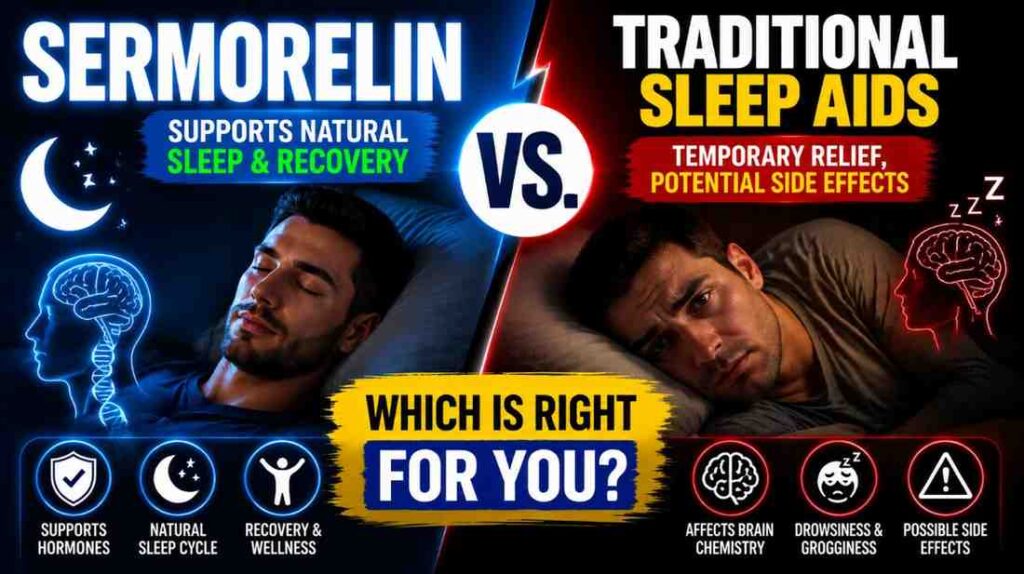
| Feature | Sermorelin | Traditional Sleep Aids |
| Purpose | Supports natural growth hormone release and recovery. | Helps improve sleep and relaxation. |
| How It Works | Works through hormone signals in the body. | Works through brain and nervous system pathways. |
| Sleep Support | May support healthy sleep cycles. | Helps with falling asleep or staying asleep. |
| Main Focus | Recovery, hormones, and wellness. | Sleep improvement. |
| Sedation | Does not directly cause sleepiness. | May cause drowsiness. |
| Use | Often used with medical guidance. | Used for short-term or ongoing sleep support. |
Factors That Can Affect Sleep While Using Sermorelin
- Sleep Schedule: A consistent bedtime and wake-up routine may help support better sleep quality.
- Stress Levels: High stress can affect relaxation and may reduce overall sleep quality.
- Diet and Nutrition: Balanced nutrition supports healthy hormone function and nighttime recovery.
- Exercise Routine: Regular activity may promote better sleep and physical recovery.
- Sleep Environment: A quiet, dark, and comfortable room can support restful sleep.
- Caffeine Intake: Limiting caffeine later in the day may help maintain healthy sleep patterns.
- Screen Time: Reducing screen exposure before bed may encourage relaxation.
- Lifestyle Habits: Healthy daily routines can support sermorelin’s role in overall wellness.
Who May Consider Sermorelin for Sleep Support?
Sermorelin may be considered by adults who are interested in supporting healthy hormone function and nighttime recovery.
Potential candidates may include individuals experiencing concerns related to:
- Age-related decline in growth hormone production
- Reduced recovery after exercise
- Poor nighttime restoration
- Changes in energy levels
- Interest in hormone optimization
However, sermorelin is not suitable for everyone. A healthcare provider should determine whether sermorelin is appropriate based on individual health factors.
Potential Side Effects and Safety Considerations of Sermorelin
- Injection Site Reaction: May cause temporary redness, swelling, or discomfort at the injection site.
- Headache: Some individuals may experience mild headaches during treatment.
- Dizziness: Temporary dizziness may occur in some users.
- Water Retention: May influence fluid balance in certain individuals.
- Medical Guidance: Sermorelin should be used under healthcare professional supervision.
- Health Evaluation: A medical review helps determine if sermorelin is suitable.
- Individual Response: Results and experiences may vary based on personal health factors.
Who Should Avoid Sermorelin?
Certain individuals may need to avoid sermorelin or use extra caution.
People should discuss sermorelin therapy carefully with a healthcare provider if they have:
- Certain hormone-related conditions
- Active cancer or a history of specific cancers
- Serious medical conditions
- Uncontrolled health concerns
- Allergies to components of the medication
Professional evaluation is important before beginning any peptide therapy.
Does Sermorelin Improve Sleep Quality Naturally?
The connection between sermorelin and sleep is primarily related to growth hormone activity.
During normal sleep cycles, especially deep sleep, the body naturally releases growth hormone. This hormone contributes to repair, recovery, and maintenance processes.
Sermorelin may help encourage this natural pathway by stimulating growth hormone release from the pituitary gland.
However, sleep quality depends on many interconnected systems, including:
- Brain chemistry
- Stress response
- Circadian rhythm
- Lifestyle habits
- Physical health
For this reason, sermorelin should be viewed as a supportive therapy rather than a guaranteed solution for sleep problems.
Scientific Research Behind Sermorelin and Sleep
Research has established that growth hormone secretion and sleep are closely connected.
Growth hormone release typically increases after falling asleep, particularly during slow-wave sleep. This relationship suggests that healthy sleep patterns play an important role in maintaining normal growth hormone rhythms.
Studies investigating growth hormone-releasing hormone pathways have explored how these signals interact with sleep regulation.
Research suggests that growth hormone-related pathways may influence:
- Sleep architecture
- Recovery processes
- Metabolic activity
- Tissue repair
However, more studies are needed to fully understand the direct effects of sermorelin specifically on sleep improvement in healthy adults.
Tips to Maximize Sleep Benefits While Supporting Hormone Health
For individuals interested in sermorelin for sleep, combining therapy with healthy habits may help support better outcomes.
Create a Relaxing Night Routine
A predictable bedtime routine signals the body that it is time to rest.
Consider:
- Reading
- Gentle stretching
- Meditation
- Reducing screen exposure
Prioritize Deep Sleep
Deep sleep is especially important because it is associated with natural growth hormone release.
Ways to encourage deeper sleep include:
- Maintaining consistent bedtime habits
- Exercising regularly
- Managing stress
- Avoiding excessive caffeine late in the day
Manage Stress Levels
Chronic stress can negatively affect sleep quality. Stress management techniques may include:
- Breathing exercises
- Mindfulness practices
- Outdoor activities
- Relaxation techniques
Is Sermorelin for Sleep Worth It?
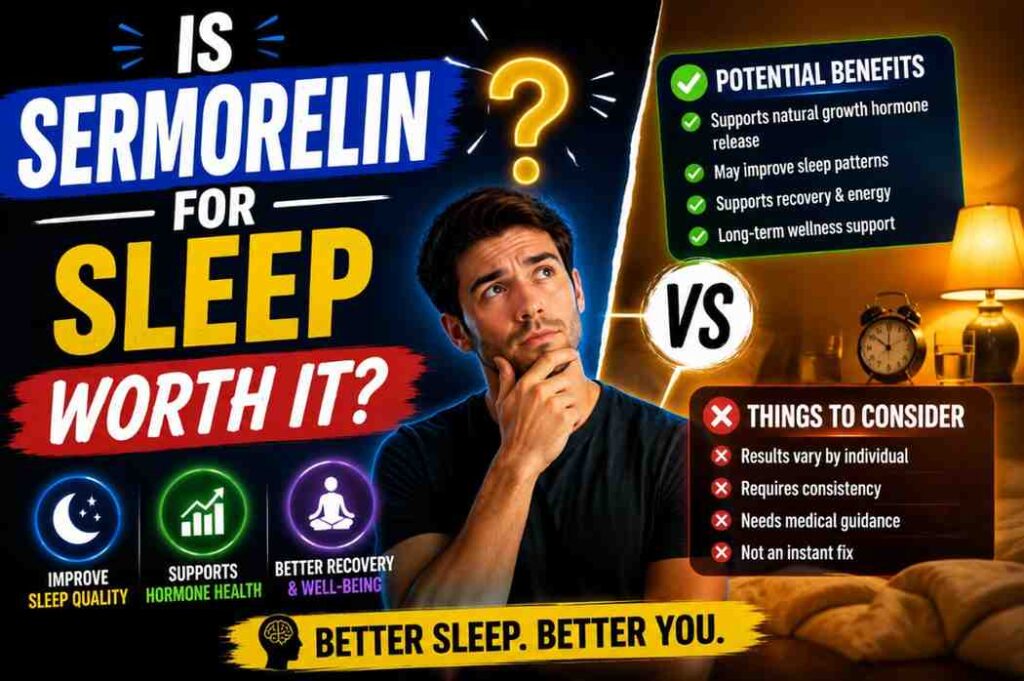
Whether sermorelin is worth considering depends on individual goals, health status, and expectations.
For people interested in supporting natural growth hormone production and improving nighttime recovery, sermorelin may offer potential benefits when used under healthcare supervision.
It is important to have realistic expectations. Sermorelin is not a quick sleep solution and does not work the same way as traditional sleep medications.
The greatest benefits are generally associated with a complete wellness approach that includes:
- Healthy sleep habits
- Balanced nutrition
- Regular movement
- Stress management
- Medical guidance
When appropriately used, sermorelin may be a valuable option for individuals looking to support hormone health and recovery.
Conclusion
I highly recommend discussing sermorelin with a qualified healthcare provider if you are interested in supporting natural growth hormone activity and nighttime recovery.
While sermorelin is not a traditional sleep medication, its role in stimulating the body’s own growth hormone pathway makes it an interesting option for individuals focused on wellness, recovery, and healthy aging.
The connection between growth hormone and sleep is well established, especially during deep sleep stages when the body performs important repair processes.
By supporting natural hormone signaling, sermorelin may help promote a healthier recovery environment when combined with proper sleep habits and lifestyle choices.
For the best results, sermorelin should be approached as part of a complete wellness strategy rather than a standalone sleep solution.
A consistent sleep schedule, nutritious diet, exercise routine, and professional medical guidance all play important roles.
If you are exploring ways to improve sleep quality, support recovery, and maintain healthy hormone function, sermorelin may be worth discussing with a healthcare professional to determine whether it fits your personal wellness goals.
References
.