Is Ozempic a GLP-1? Benefits, Uses & How It Works Explained
Ozempic has become one of the most talked-about prescription medications in recent years.
Originally approved for managing type 2 diabetes, it has also gained attention because many users experience significant weight loss during treatment.
As a result, healthcare providers sometimes prescribe it off-label for weight management, while similar GLP-1 medications have been specifically approved for obesity treatment.
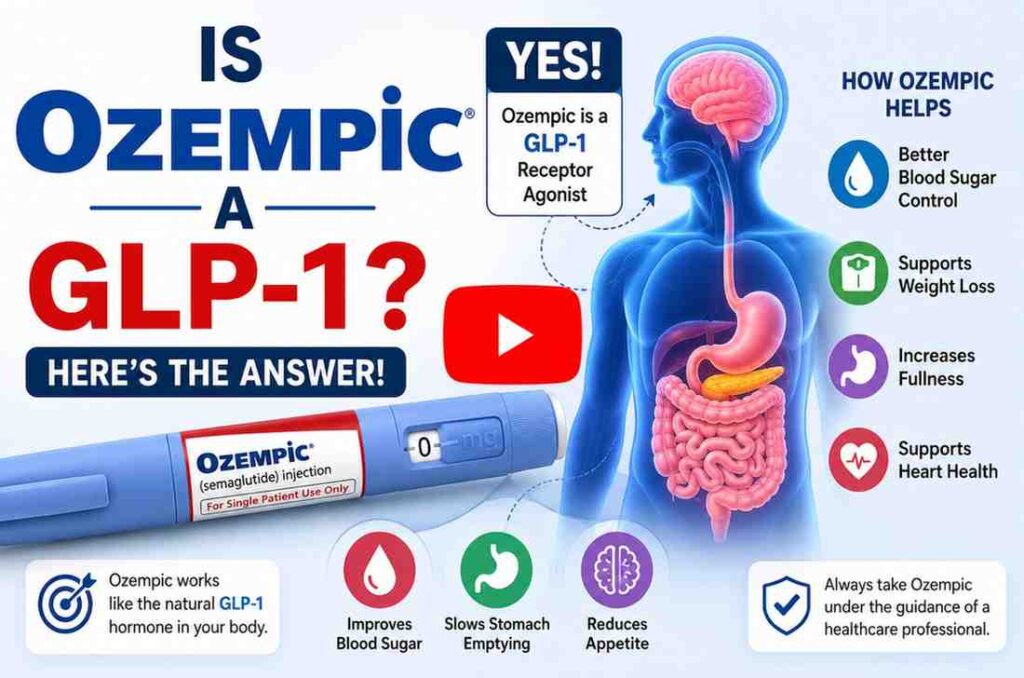

Yes, Ozempic is a GLP-1 receptor agonist. It helps regulate blood sugar, reduces appetite, supports weight loss, and is commonly prescribed for type 2 diabetes.
What Is GLP-1?
GLP-1 stands for Glucagon-Like Peptide-1, a hormone naturally produced in your intestines after eating.
It plays an important role in regulating:
- Blood sugar
- Appetite
- Digestion
- Insulin secretion
- Glucagon production
GLP-1 helps your body naturally control blood sugar.
Normally, the hormone is released after meals and signals your pancreas to release insulin while reducing glucagon, a hormone that raises blood sugar.
GLP-1 also slows stomach emptying, helping people feel full longer after eating.
Main Functions of GLP-1
| Function | Benefit |
|---|---|
| Stimulates insulin | Lowers blood sugar |
| Suppresses glucagon | Prevents blood sugar spikes |
| Slows digestion | Improves fullness |
| Reduces appetite | Helps with weight loss |
| Improves glucose control | Supports diabetes management |
Is Ozempic a GLP-1?
Yes. Ozempic is a GLP-1 receptor agonist.
The active ingredient in Ozempic is semaglutide, which mimics the natural GLP-1 hormone found in your body.
Instead of directly replacing the hormone, Ozempic activates GLP-1 receptors, producing many of the same beneficial effects.
Ozempic works by imitating your body’s natural GLP-1 hormone.
What Is Ozempic?
Ozempic is a once-weekly injectable prescription medication primarily approved for adults with type 2 diabetes.
Its active ingredient:
- Semaglutide
Drug class:
- GLP-1 receptor agonist
Administration:
- Weekly injection
Common Uses:
- Type 2 diabetes management
- Blood sugar control
- Cardiovascular risk reduction in eligible patients
- Weight loss (off-label in some situations)
How Does Ozempic Work?
Ozempic works through several mechanisms simultaneously.
1. Increases Insulin Production
When blood sugar rises after eating, Ozempic helps the pancreas release insulin.
This lowers glucose safely.
2. Reduces Glucagon
Ozempic decreases glucagon production.
Less glucagon means the liver releases less stored sugar into the bloodstream.
3. Slows Stomach Emptying
Food stays in the stomach longer.
This helps people:
- Feel full
- Eat less
- Reduce snacking
Feeling full longer is one reason Ozempic may support weight loss.
4. Reduces Appetite
GLP-1 receptors are found in the brain.
Ozempic affects appetite centers, helping many users naturally consume fewer calories.
Why Is Ozempic So Popular?
Ozempic has become widely recognized for addressing several health concerns simultaneously.
Potential benefits include:
- Better blood sugar control
- Lower A1C levels
- Reduced appetite
- Weight loss support
- Once-weekly dosing
- Heart health benefits for certain patients with type 2 diabetes

Benefits of Ozempic
Better Blood Sugar Management
Ozempic helps maintain healthier glucose levels throughout the day.
Many people experience:
- Lower fasting glucose
- Reduced post-meal spikes
- Improved A1C
Consistent blood sugar control can reduce diabetes-related complications.
Weight Loss Support
Although Ozempic is approved for diabetes, weight loss is one of its most notable effects.
Weight loss occurs because:
- Appetite decreases
- Fullness increases
- Calorie intake naturally drops
Many people also report fewer food cravings.
Heart Health Benefits
Clinical studies have shown Ozempic can reduce the risk of major cardiovascular events in certain adults with type 2 diabetes and established cardiovascular disease.
This makes it valuable beyond glucose management.
Convenient Weekly Injection
Unlike medications taken daily, Ozempic requires only one injection each week.
Many patients find this easier to remember.
Improved Satiety
People often feel satisfied with smaller portions.
This supports healthier eating habits over time.
Is Ozempic Approved for Weight Loss?
Ozempic itself is approved for:
- Type 2 diabetes
However, semaglutide is also available under another brand, approved specifically for chronic weight management in eligible adults.
Some healthcare providers prescribe Ozempic off-label for weight management when appropriate.
Always use Ozempic under medical supervision.
Who Can Take Ozempic?
Ozempic may be appropriate for adults who:
- Have type 2 diabetes
- Need better blood sugar control
- May benefit from weight reduction
- Have cardiovascular risk factors and meet prescribing criteria
A healthcare professional will determine whether it is suitable based on your medical history.
Who Should Avoid Ozempic?
Ozempic may not be appropriate for everyone.
It may not be recommended for people with:
- Type 1 diabetes
- A history of certain thyroid tumors
- Multiple Endocrine Neoplasia syndrome type 2 (MEN 2)
- Known hypersensitivity to semaglutide or its ingredients
People who are pregnant, breastfeeding, or planning pregnancy should consult their healthcare provider before using Ozempic.
Common Side Effects
Like most prescription medications, Ozempic may cause side effects.
Common side effects include:
- Nausea
- Vomiting
- Diarrhea
- Constipation
- Stomach pain
- Reduced appetite
- Indigestion
These effects are often more noticeable when starting treatment or when increasing the dose, and they may improve over time for many people.
Serious Side Effects
Although less common, serious risks may include:
- Pancreatitis
- Gallbladder problems
- Kidney complications related to dehydration
- Severe allergic reactions
Seek immediate medical care if you experience severe symptoms such as intense abdominal pain, difficulty breathing, or swelling of the face or throat.
How Is Ozempic Taken?
Ozempic is administered as a once-weekly injection under the skin.
It can be injected into:
- Abdomen
- Thigh
- Upper arm
Your healthcare provider will explain the correct injection technique and dosing schedule.
Ozempic Dosage
Treatment often begins with a lower dose to help reduce gastrointestinal side effects. If needed, the dose may be increased gradually under the guidance of a healthcare provider.
Never change your dose without consulting your healthcare provider.
Ozempic vs Other GLP-1 Medications
| Medication | Active Ingredient | GLP-1 | Weekly |
|---|---|---|---|
| Ozempic | Semaglutide | Yes | Yes |
| Wegovy | Semaglutide | Yes | Yes |
| Trulicity | Dulaglutide | Yes | Yes |
| Victoza | Liraglutide | Yes | No |
| Mounjaro* | Tirzepatide | Dual GIP/GLP-1 receptor agonist | Yes |
*While Mounjaro also activates the GLP-1 receptor, it additionally targets the GIP receptor, making it different from medications that act solely as GLP-1 receptor agonists.

Ozempic vs Insulin
| Ozempic | Insulin |
|---|---|
| GLP-1 receptor agonist | Hormone replacement |
| Weekly injection | Often daily injections |
| Helps reduce appetite | Does not typically reduce appetite |
| May support weight loss | May be associated with weight gain in some people |
| Lowers blood sugar through GLP-1 pathways | Directly lowers blood sugar |
Lifestyle Tips While Taking Ozempic
Medication works best when combined with healthy habits.
Recommended lifestyle practices include:
- Eat balanced meals
- Prioritize lean protein
- Increase vegetables
- Stay hydrated
- Exercise regularly
- Sleep 7–9 hours per night
- Follow your healthcare provider’s advice
Healthy habits can enhance the benefits of GLP-1 therapy.
Key Takeaways
- Yes, Ozempic is a GLP-1 receptor agonist.
- Its active ingredient is semaglutide.
- It helps improve blood sugar control in adults with type 2 diabetes.
- Many people also experience weight loss due to reduced appetite and increased fullness.
- Ozempic is typically administered once weekly.
- It should be used only under the guidance of a qualified healthcare provider.
Final Verdict
If you’ve been wondering “Is Ozempic a GLP-1?”, the answer is a clear yes. Ozempic belongs to the GLP-1 receptor agonist class of medications and works by mimicking the body’s natural GLP-1 hormone.
This helps improve blood sugar control, slow stomach emptying, reduce appetite, and support weight management in many individuals.
Ozempic has transformed the treatment approach for many people with type 2 diabetes. However, it is a prescription medication that should only be used under medical supervision.
When combined with a healthy diet, regular physical activity, and routine follow-up with a healthcare provider, Ozempic can be an effective component of a comprehensive diabetes and weight management plan.
References
- https://pmc.ncbi.nlm.nih.gov/articles/PMC10533252/
- https://www.webmd.com/drugs/ozempic-semaglutide
- https://www.healthline.com/health/drugs/ozempic-for-weight-loss
.