What Does Vicks VapoRub Actually Do? Benefits & Uses
What Does Vicks VapoRub Actually Do?
Benefits, everyday uses, safety limits, and which popular claims hold up. A plain-language guide to menthol, camphor, and eucalyptus oil.
Vicks VapoRub has been a familiar name in household wellness for generations. From soothing nighttime coughs to providing comforting relief during cold weather, this mentholated ointment has earned a place in medicine cabinets worldwide. Its distinctive aroma, cooling sensation, and convenient application make it a popular choice for people seeking temporary relief from everyday discomfort.
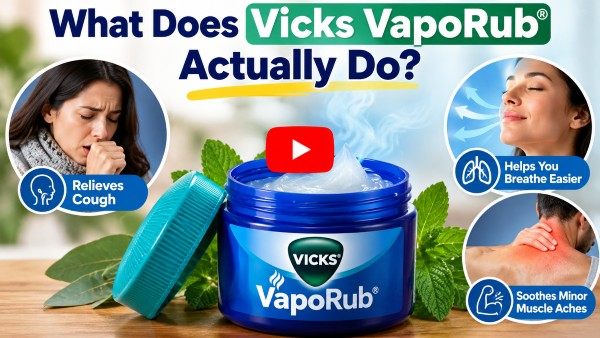

But what does Vicks VapoRub actually do, and how does it work? Many people associate it with clearer breathing, reduced coughing, muscle relaxation, and a comforting bedtime routine. Others wonder whether it can help with headaches, sinus congestion, sleep, foot discomfort, or other common concerns.
The answer lies in its active ingredients, how they interact with sensory receptors, and which benefits are supported by scientific evidence. Vicks VapoRub is primarily a topical cough suppressant and minor muscle and joint pain reliever.
- What Is Vicks VapoRub?
- How Does Vicks VapoRub Actually Work?
- What Are the Active Ingredients in Vicks VapoRub?
- What Does Vicks VapoRub Actually Do? 10 Benefits and Common Uses
- Popular Questions: Lungs, Nose, Headaches, Feet, Nails, and Memory
- How to Use Vicks VapoRub Correctly
- Is Vicks VapoRub Safe for Everyday Use?
- Vicks VapoRub and Kids: What Parents Should Know
- Can You Use Vicks VapoRub With a Humidifier or Vaporizer?
- Vicks VapoRub and Pets: Keep It Out of Reach
- How to Store Vicks VapoRub and When to Replace It
- When to Stop Using It and See a Doctor
- Vicks VapoRub vs. Other Common Cold Remedies
- What Science Says About Vicks VapoRub
- Common Myths About Vicks VapoRub
- Tips for Getting the Most From Vicks VapoRub
- Frequently Asked Questions
- Final Verdict: What Does Vicks VapoRub Actually Do?
What Is Vicks VapoRub?
Vicks VapoRub is an over-the-counter topical ointment that provides temporary relief from coughing associated with the common cold and minor muscle and joint aches.
Produced under the Vicks brand, it is widely recognized for its strong mentholated fragrance and smooth, petroleum-based consistency.
Unlike oral cough syrups or nasal decongestant sprays, Vicks VapoRub is applied directly to the skin. Its ingredients release aromatic vapors that can be inhaled naturally while the product remains on the chest or throat.
People commonly use it in the evening or before bedtime, when coughing and cold-related discomfort may interfere with sleep.
Quick overview
| Feature | Details |
|---|---|
| Product type | Topical cough suppressant and analgesic |
| Active ingredients | Camphor, menthol, eucalyptus oil |
| Primary benefits | Temporary cough relief and minor muscle or joint pain relief |
| Application areas | Chest, throat, muscles, and joints |
| Suitable age | Adults and children aged 2 years and older |
| Main sensation | Cooling, aromatic, soothing |
| Availability | Pharmacies, supermarkets, and online retailers |
| Intended use | Temporary symptomatic relief |
The main advantage of Vicks VapoRub is localized comfort without an oral medication. It does not cure the common cold, eliminate respiratory infections, or directly treat the underlying causes of nasal congestion.
How Does Vicks VapoRub Actually Work?
Vicks VapoRub works through a combination of aromatic ingredients, sensory stimulation, and topical counterirritant effects. When applied to the chest or throat, its volatile ingredients gradually evaporate, producing the recognizable Vicks aroma.
1. It activates cooling sensory receptors
Menthol activates temperature-sensitive receptors known as TRPM8, which are involved in detecting cool sensations.
When menthol stimulates them, the brain interprets the signal as cooling. This can create the feeling of fresher airflow even when actual nasal airflow remains unchanged. Menthol can make breathing feel more comfortable without physically clearing a blocked nose.
2. It provides temporary cough relief
Vicks VapoRub is labeled for temporary relief of coughing associated with the common cold. The exact mechanisms behind its cough-relieving effect are not fully established, but sensory stimulation is believed to play a role.
Some clinical research has also explored whether aromatic ointments can improve nighttime cold symptoms.
3. It produces a counterirritant effect
Camphor and menthol act as topical counterirritants. A counterirritant produces a noticeable cooling or warming sensation on the skin, which can temporarily change how minor aches are perceived. Applied to sore muscles, it may offer a cooling distraction from mild discomfort.
4. It releases aromatic vapors
Eucalyptus oil contributes to the familiar scent. Together with menthol and camphor, it creates a strong aromatic experience many people associate with comfort during seasonal colds.
These vapors do not need to enter the bloodstream to produce their characteristic sensory effects.
What Are the Active Ingredients in Vicks VapoRub?
The traditional U.S. formulation contains three active ingredients that work together to produce its cough-suppressing and topical pain-relieving effects.
Menthol (2.6%)
Menthol is a naturally occurring compound associated with peppermint and other mint plants, widely used in cough drops, topical analgesics, and cooling skincare.
In Vicks VapoRub it creates the cooling sensation, supports the perception of easier breathing, and contributes to minor pain relief.
Camphor (4.8%)
Camphor is an aromatic compound used in certain topical medicines. It is included for cough suppression and temporary relief of minor muscle and joint aches, and it adds to the distinctive fragrance.
Although useful in properly formulated topical products, camphor can be toxic if swallowed. Never ingest Vicks VapoRub or put it in your nostrils.
Eucalyptus oil (1.2%)
Eucalyptus oil is obtained from eucalyptus plants and is labeled as a cough suppressant in this product. Its scent can provide a refreshing sensory experience during a cold. The eucalyptus oil in the ointment should not be confused with concentrated essential oils, which have different safety considerations.
Inactive ingredients
The ointment also contains petrolatum, cedarleaf oil, nutmeg oil, thymol, and turpentine oil in the traditional U.S. formulation. Petrolatum is the base that keeps the actives on the skin while they release vapors. The three active ingredients provide the labeled medicinal effects.
What Does Vicks VapoRub Actually Do? 10 Benefits and Common Uses
Vicks VapoRub offers several practical benefits, particularly for temporary cough discomfort and minor muscle aches.
Some popular uses are supported by medical evidence, while others rest mainly on personal experience or tradition. Knowing the difference helps you use the product effectively and safely.
1. Helps relieve coughing during a cold
Coughing often occurs during a cold because of irritation in the throat and respiratory passages. Applying Vicks VapoRub to the chest and throat releases medicated vapors that may help soothe cough-related discomfort, particularly at night.
For many families, applying it before bed is a familiar part of cold care. The ointment does not treat the virus responsible for the cold.
2. Creates the sensation of easier breathing
When your nose is stuffy, breathing feels uncomfortable because swollen nasal tissues or mucus make it are to breathe.
Menthol stimulates cooling receptors that influence how airflow is perceived, so the nose can feel more open even though swelling has not changed. People with significant blockage may need treatments designed specifically for congestion.
3. May improve comfort during nighttime colds
Nighttime coughing can make it hard to fall asleep or stay asleep. A clinical study published in Pediatrics compared vapor rub, petroleum jelly, and no treatment in 138 children aged 2 to 11 with nighttime cold symptoms.
Parents reported greater improvements in cough and sleep difficulty in the vapor-rub group. However, irritation was more common in that group, and the study relied on parent-reported outcomes.
This does not make Vicks VapoRub a sleeping medication or a treatment for insomnia.
4. Temporarily relieves minor muscle aches
Menthol and camphor produce sensory effects that may reduce the perception of discomfort. This can be useful for occasional soreness after a physically demanding day. It should not replace appropriate care for injuries, persistent pain, or significant inflammation.
5. Helps with minor joint discomfort
The product is labeled for temporary relief of minor joint aches. Applied to intact skin over the affected area, its topical analgesic ingredients may provide short-term comfort.
It does not rebuild cartilage, reverse arthritis, or treat structural joint problems. Persistent swelling, redness, or severe pain deserves medical evaluation.
6. Provides a refreshing cooling sensation
Menthol interacts with cold-sensitive nerve receptors, creating a refreshing feeling without necessarily lowering skin temperature. That cooling does not mean the product reduces fever or internal body temperature.
7. May help you feel more comfortable during seasonal illness
Colds bring coughing, stuffiness, and disrupted sleep. Vicks VapoRub can complement other supportive measures such as staying hydrated, resting, and using saline nasal spray. It does not shorten the duration of a viral infection or strengthen the immune system.
8. Offers convenient topical application
Unlike medicines that must be swallowed, the ointment is applied directly to the appropriate areas of skin. For adults and children aged 2 and older, use as directed on the package. Topical use still carries a risk of side effects, so proper use remains essential.
9. May support a familiar bedtime routine
The scent is strongly associated with traditional cold care. Familiar scents and routines can influence feelings of comfort and relaxation, but those experiences are subjective and should not be mistaken for proven sedative effects. Vicks VapoRub should not be used as a sleep aid by people without cough symptoms.
10. Gives temporary relief without treating the underlying cause
One of its most useful traits is also its main limitation. It relieves certain symptoms rather than eliminating their causes. The ointment may ease a cough while your immune system keeps working on a viral infection, and it may ease minor muscle pain without addressing why the pain developed. Understanding this keeps expectations realistic.
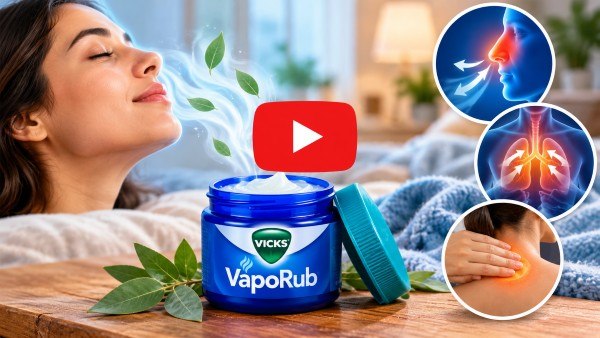
Popular Questions: Lungs, Nose, Headaches, Feet, Nails, and Memory
Does Vicks VapoRub clear your lungs?
No. It does not dissolve mucus, clear infected lung tissue, or remove fluid from the respiratory system. Its aromatic ingredients mainly affect sensory perception and may help relieve coughing tied to minor throat and bronchial irritation during a cold.
Breathing may feel easier after application, but that does not mean airways have physically widened. See a healthcare professional for persistent chest congestion, wheezing, shortness of breath, or worsening respiratory symptoms.
Does it help a stuffy nose?
It can make a stuffy nose feel more comfortable because menthol stimulates cooling receptors, but this differs from true decongestion. A nasal decongestant reduces swelling in nasal tissues, while Vicks VapoRub mostly changes how breathing feels.
For real blockage, saline sprays or rinses can help loosen mucus, and selected decongestant medicines may reduce swelling when used appropriately. Never apply the ointment inside or directly beneath the nostrils.
Can it help with headaches?
The cooling sensation of menthol may soothe some people, but Vicks VapoRub is not approved as a headache treatment, and strong clinical evidence is lacking. Applying it to the forehead, temples, or near the eyes is not recommended because of irritation risk.
Hydration, rest, or an appropriate over-the-counter pain reliever may be better choices. Frequent, severe, or unusual headaches need medical attention.
Does putting it on your feet stop coughing?
This household practice is popular, usually with socks worn afterward, but there is no convincing clinical evidence that it suppresses coughing.
The labeled application areas for cough relief are the chest and throat, and the feet are unlikely to give the same exposure to aromatic vapors.
Can it treat toenail fungus?
Laboratory observations suggest certain aromatic ingredients may have antifungal activity, and a few small preliminary studies have explored mentholated ointments for nail fungus.
The evidence is still insufficient to call it an effective or reliable treatment for onychomycosis, and it is not FDA-approved for that purpose. Toenail fungus can be persistent and may need prescription or other treatment.
Does it help memory or brain function?
The sense of smell is closely linked to brain regions involved in emotion and memory, so familiar scents can trigger vivid memories.
That is different from improving cognition. There is no established clinical evidence that Vicks VapoRub restores lost memories, prevents dementia, or treats Alzheimer’s disease.
Claim check at a glance
| Popular use | What the evidence says | Verdict |
|---|---|---|
| Cold and cough relief | Helps soothe nighttime coughing. | Effective Relief |
| Muscle and joint pain | Temporarily eases minor aches. | Proven Benefit |
| Breathing comfort | Provides a refreshing cooling sensation. | Soothing Comfort |
| Nasal congestion | Creates a feeling of easier breathing. | Refreshing Relief |
| Headache comfort | Cooling aroma may feel relaxing. | Potential Comfort |
| Applying to feet | Popular traditional wellness practice. | Proven Remedy |
| Toenail fungus | Early research suggests potential benefits. | Promising Research |
| Memory and brain health | Familiar scents may stimulate memory associations. | Sensory Connection |
👉 DON’T TRY THIS “VICKS VAPOR RUB FOR MEMORY LOSS” UNTIL YOU SEE THIS
How to Use Vicks VapoRub Correctly
Using it correctly is the best way to get its intended benefits while keeping irritation risk low.
For cough relief
- Make sure the person is at least 2 years old.
- Apply a thick layer to the chest and throat.
- Keep clothing loose around the chest and neck so vapors can reach the nose and mouth.
- Cover with a warm, dry cloth if desired, without heating the product.
- Use up to three times daily or as directed by a doctor.
For minor muscle and joint aches
- Apply to the affected area of intact skin, following the product directions.
- Use no more than three to four times daily, per the manufacturer’s instructions.
- Avoid wounds, irritated skin, and damaged areas.
How long does it take to work?
The ointment begins releasing aromatic vapors shortly after application, and some people notice the cooling sensation within minutes. Relief varies with individual sensitivity, the amount applied, and the symptoms involved. There is no guarantee everyone will feel the same improvement.
How long does it last?
The fragrance may stay noticeable for several hours, but that does not mean the medicinal effect lasts the whole time. For cough relief the label allows use up to three times daily, and for muscle and joint discomfort no more than three to four times daily. Applying more, or more often, does not guarantee better results and may increase skin irritation.
Is Vicks VapoRub Safe for Everyday Use?
It is generally considered appropriate for short-term use when applied according to the label by adults and children aged 2 and older. It is not meant for unlimited daily use for chronic respiratory or pain conditions. Possible side effects include skin irritation, redness, burning sensations, and sensitivity to strong aromatic ingredients.
Per the label, talk to a doctor if a cough lasts more than one week, keeps coming back, or occurs with fever, rash, or persistent headache. For muscle or joint discomfort, get medical advice if pain worsens or continues for more than seven days. People who are pregnant or breastfeeding should consult a healthcare professional before use.
Who should avoid it?
- Children younger than 2 years should not use the traditional formula.
- Anyone who has had an allergic reaction to menthol, camphor, eucalyptus oil, or other ingredients.
- People with sensitive skin, who may experience irritation.
- People with chronic respiratory conditions, unexplained coughing, or significant breathing difficulty, who should get medical advice rather than rely on the ointment alone.
Vicks VapoRub and Kids: What Parents Should Know
The pediatric research behind vapor rubs involved children aged 2 to 11, and the label limits use to ages 2 and up. For a child in that range, apply a thin-to-moderate layer to the chest and throat only, keep it away from the face, and wash hands afterward so the child does not rub it into their eyes or put fingers in their mouth.
For babies and toddlers under 2, skip the traditional ointment. Saline drops, gentle suction, a clean cool-mist humidifier, extra fluids as advised, and a call to your pediatrician are safer starting points. Seek urgent care for fast or labored breathing, a bluish tint to the lips, or a baby who is hard to wake.
Can You Use Vicks VapoRub With a Humidifier or Vaporizer?
This is a common mix-up. The ointment itself should not be melted, heated, or dropped into hot water, and it should not be put into a humidifier. Some devices and Vicks products are designed for medicated vapor, so check the manufacturer’s instructions for your specific device before adding anything to the water. A properly cleaned cool-mist humidifier running plain water is a simple way to ease dry indoor air.
Vicks VapoRub and Pets: Keep It Out of Reach
Camphor, menthol, and eucalyptus oil can harm dogs, cats, and other pets if they lick or swallow it, and the strong scent can irritate their airways. Do not apply the ointment to pets, and avoid using it where a pet may lick your skin or bedding right after application. If a pet eats it or develops drooling, vomiting, or unusual behavior, contact a veterinarian or an animal poison hotline immediately.
How to Store Vicks VapoRub and When to Replace It
Keep the jar tightly closed, at room temperature, away from heat and direct sunlight, and out of reach of children. Check the printed expiration date and replace the product afterward. Throw it away if it changes color or smell noticeably, or if it has been contaminated, for instance by dipping used fingers in the jar. Scooping with a clean spatula or washing your hands first keeps it cleaner.
When to Stop Using It and See a Doctor
- Skin redness, burning, rash, or swelling that does not settle after washing the area.
- A cough lasting longer than a week, or one that returns or comes with fever.
- Shortness of breath, wheezing, chest pain, or worsening symptoms.
- Muscle or joint pain that worsens or lasts more than seven days.
- Any suspected swallowing of the ointment.
Vicks VapoRub vs. Other Common Cold Remedies
It works differently from many other over-the-counter cold products, and understanding the differences helps you choose what fits your symptoms.
| Product type | Primary purpose | Main difference |
|---|---|---|
| Vicks VapoRub | Temporary cough and minor muscle pain relief | Topical aromatic ointment |
| Saline nasal spray | Helps loosen and clear nasal mucus | Acts directly in nasal passages |
| Nasal decongestant spray | Temporarily reduces nasal swelling | Directly targets nasal congestion |
| Oral cough suppressant | Helps reduce certain types of coughing | Taken by mouth |
| Expectorant | Helps loosen mucus in the airways | Targets mucus-related symptoms |
| Humidifier | Adds moisture to dry indoor air | Supports environmental comfort |
Not every cold remedy suits every age group or medical condition, and certain nasal decongestant sprays can cause rebound congestion when used too long. Vicks VapoRub is best seen as a complementary symptom-relief option rather than a replacement for other treatments.
What Science Says About Vicks VapoRub
One frequently discussed trial was published in Pediatrics in 2010. Researchers compared a vapor rub, petroleum jelly, and no treatment among 138 children aged 2 to 11 with nighttime cough and cold symptoms. Parents rated cough severity, congestion, and sleep difficulty, and the vapor-rub group generally received more favorable ratings. Mild irritant side effects were also more frequent in that group.
Limitations include the short duration and reliance on parent-reported scores. The results suggest vapor rub may provide meaningful short-term comfort during a cold, but they do not show that it cures illness or physically clears nasal obstruction.
Research on menthol also explains the perception of easier breathing: it stimulates cooling-related sensory pathways. The strongest practical evidence supports temporary symptom relief, not treatment of the underlying infection.
Common Myths About Vicks VapoRub
Tips for Getting the Most From Vicks VapoRub
- Stay well hydrated to support comfort during a cold.
- Rest and keep a consistent sleep schedule to support recovery.
- Use saline nasal spray for nasal mucus and a properly cleaned cool-mist humidifier for dry indoor air.
- Avoid cigarette smoke and other respiratory irritants.
- Apply the ointment only to recommended areas and follow the package instructions.
- Watch for fever, shortness of breath, chest pain, or a worsening cough, which may need medical attention.
Vicks VapoRub works best as one part of an appropriate symptom-management routine.
Frequently Asked Questions
What does Vicks VapoRub actually do to your body?
Does Vicks VapoRub really help you breathe better?
What happens when you rub Vicks on your chest?
Is Vicks VapoRub good for your lungs?
Can Vicks VapoRub help you sleep?
Can you put Vicks VapoRub under your nose?
Does Vicks VapoRub remove mucus?
Can I use Vicks VapoRub every day?
Is Vicks VapoRub safe around pets?
Final Verdict: What Does Vicks VapoRub Actually Do?
Vicks VapoRub remains a practical, widely recognized topical product for temporary relief from certain common cold symptoms and minor muscle or joint discomfort.
Its blend of menthol, camphor, and eucalyptus oil produces the familiar cooling sensation and aromatic vapors many people associate with comfort during seasonal illness.
Its most established benefits are temporarily relieving coughs associated with the common cold and providing short-term relief from minor muscle and joint aches.
Some research also suggests mentholated vapor rubs may improve nighttime comfort when cold-related coughing interferes with sleep. However, it does not cure colds, remove lung infections, physically clear nasal passages, or treat serious respiratory diseases.
Follow the manufacturer’s instructions, recognize its limitations, and seek professional guidance if symptoms persist or worsen. Use it for its proven purposes, pair it with healthy recovery habits, and base decisions on reliable medical evidence.