Sermorelin vs TRT: Which Is Better? Safety & Results Explained
Hormone health plays an important role in energy, muscle development, body composition, recovery, sleep quality, and overall wellness.
As people age, natural hormone production can gradually decline, leading many individuals to explore hormone optimization treatments. Two commonly discussed options are Sermorelin therapy and Testosterone Replacement Therapy (TRT).
While both treatments are associated with improving hormone-related concerns, they work through completely different biological pathways.
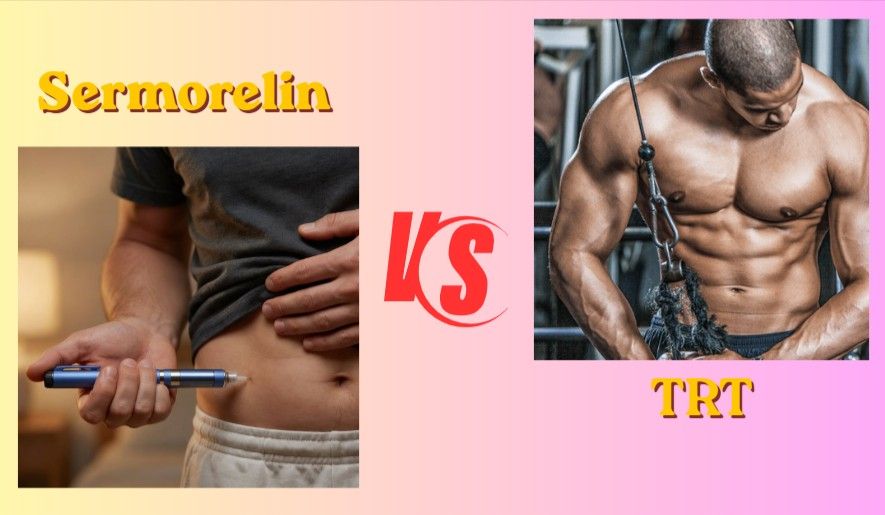
Sermorelin supports the body’s natural growth hormone production, while TRT directly increases testosterone levels by providing supplemental testosterone.
Sermorelin stimulates the natural release of growth hormone, while TRT replaces testosterone. The right choice depends on your hormone levels, goals, and health needs.
Understanding the differences between Sermorelin vs TRT can help individuals make more informed decisions when discussing hormone therapy options with a qualified healthcare provider.
This comprehensive guide explains how Sermorelin and TRT work, their potential benefits, differences, safety considerations, and factors that may influence which therapy is appropriate for different individuals.
What Is Sermorelin?
Sermorelin is a peptide-based therapy designed to stimulate the body’s natural production of growth hormone. It belongs to a category of compounds known as growth hormone-releasing hormone (GHRH) analogs.
Instead of directly supplying growth hormone, Sermorelin signals the pituitary gland to release more of the growth hormone that the body naturally produces.
Growth hormone plays a role in several important functions, including:
- Supporting muscle growth and repair
- Helping maintain healthy body composition
- Supporting recovery after physical activity
- Promoting healthy metabolism
- Contributing to skin and tissue maintenance
- Supporting overall wellness
As people age, growth hormone production naturally declines. Some individuals explore Sermorelin therapy as part of a broader wellness or hormone optimization approach.
Sermorelin encourages the body to use its own natural hormone pathways.
Unlike direct hormone replacement, Sermorelin stimulates the body’s own hormone production rather than replacing the hormone itself.
What Is Testosterone Replacement Therapy (TRT)?
Testosterone Replacement Therapy, commonly known as TRT, is a medical treatment designed to increase testosterone levels in individuals with low testosterone.
Testosterone is a primary male sex hormone that influences many aspects of health, including:
- Muscle mass development
- Bone strength
- Sexual health
- Mood regulation
- Energy levels
- Red blood cell production
- Fat distribution
Testosterone levels naturally change with age. However, some individuals experience testosterone levels below the normal range, which may result in symptoms associated with low testosterone.
TRT works by introducing testosterone into the body through different delivery methods, such as:
- Injections
- Gels
- Creams
- Patches
- Other prescribed formulations
TRT directly replaces testosterone when the body is not producing enough.
Unlike Sermorelin, TRT does not stimulate the body to produce more testosterone naturally. Instead, it provides testosterone from an external source.
Sermorelin vs TRT: How Do They Work?
The biggest difference between Sermorelin and TRT lies in their mechanisms of action.
How Sermorelin Works
Sermorelin signals the pituitary gland to release growth hormone. The released growth hormone then stimulates the production of insulin-like growth factor-1 (IGF-1), which supports various growth and repair processes.
The process generally follows this pathway:
Sermorelin → Pituitary stimulation → Growth hormone release → IGF-1 production → Body repair and metabolic support
Because Sermorelin stimulates natural hormone production, the body maintains some control over hormone release.
How TRT Works
TRT works by introducing testosterone directly into the body. The added testosterone increases circulating testosterone levels, helping restore levels that may be lower than desired.
The process is:
Testosterone therapy → Increased testosterone levels → Hormonal balance support → Improvement of testosterone-related symptoms
TRT bypasses the body’s natural testosterone production process by providing the hormone externally.
The main difference is simple: Sermorelin stimulates production, while TRT replaces testosterone.
Sermorelin vs TRT: Main Differences
Although both therapies are related to hormones, they serve different purposes.
| Feature | Sermorelin | TRT |
|---|---|---|
| Primary Hormone | Growth hormone pathway | Testosterone |
| Main Purpose | Stimulate natural growth hormone release | Replace low testosterone |
| Treatment Type | Peptide therapy | Hormone replacement |
| Target Area | Growth hormone production | Testosterone levels |
| Common Goal | Recovery, body composition, wellness support | Testosterone deficiency management |
| Production Approach | Encourages natural release | Provides external hormone |
Understanding these differences is essential because the therapies are not interchangeable.
Choosing between Sermorelin and TRT depends on which hormone system needs support.
Potential Benefits of Sermorelin Therapy
Sermorelin may offer several benefits for growth hormone optimization.
1. Supports Natural Growth Hormone Production
One of the primary advantages of Sermorelin is that it encourages the body’s own growth hormone release.
Rather than directly replacing growth hormone, it supports the natural signaling process.
2. May Support Muscle Recovery
Growth hormone plays an important role in tissue repair and recovery.
Some individuals use Sermorelin as part of a wellness plan focused on maintaining muscle health and physical performance.
3. Supports Healthy Body Composition
Growth hormone is involved in the regulation of metabolism and body composition.
By supporting natural growth hormone pathways, Sermorelin may help individuals working toward healthier body composition goals.
4. May Improve Sleep Quality
Growth hormone release is closely connected with deep sleep cycles.
Supporting healthy hormone rhythms may help improve sleep patterns for some individuals.
5. Supports Overall Wellness
Some people explore Sermorelin therapy to support energy, recovery, and age-related wellness concerns.
Sermorelin focuses on optimizing natural hormone signaling rather than replacing hormones directly.
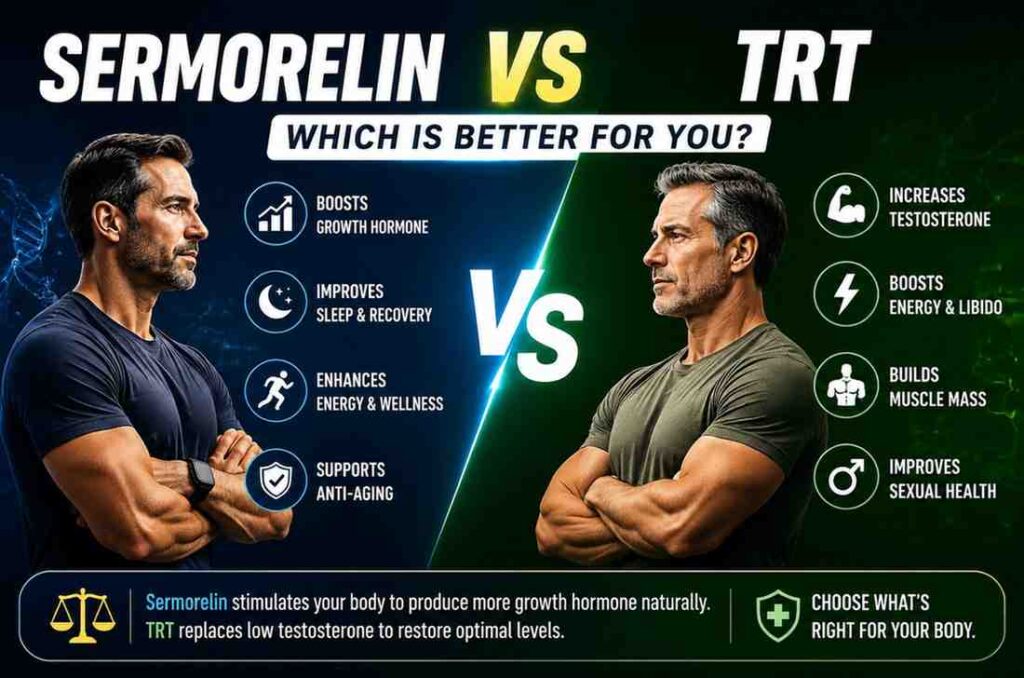
Potential Benefits of TRT
TRT is commonly used for individuals diagnosed with low testosterone levels.
1. Helps Restore Testosterone Levels
The primary purpose of TRT is to increase testosterone levels when they are below the normal range.
2. Supports Muscle Maintenance
Testosterone plays a significant role in muscle development and maintenance.
When testosterone levels improve, some individuals may experience better support for strength and physical performance.
3. May Improve Energy Levels
Low testosterone is sometimes associated with fatigue and reduced motivation.
TRT may help improve energy levels in individuals with confirmed testosterone deficiency.
4. Supports Sexual Health
Testosterone contributes to libido and sexual function.
Men with low testosterone may experience improvements in these areas after appropriate treatment.
5. Supports Mood and Well-Being
Hormones influence emotional health and mental well-being.
Some individuals report improved mood after restoring testosterone levels through medically supervised TRT.
TRT is specifically designed for addressing testosterone deficiency, not increasing growth hormone.
Who May Consider Sermorelin?
Sermorelin may be considered by individuals interested in supporting natural growth hormone production.
Potential candidates may include people experiencing concerns related to:
- Age-related decline in growth hormone levels
- Recovery and physical performance goals
- Body composition changes
- Reduced wellness with aging
However, eligibility depends on individual health history, hormone levels, and medical evaluation.
A healthcare provider can determine whether Sermorelin is appropriate based on personal health factors.
Who May Consider TRT?
TRT is generally considered for individuals who have clinically low testosterone confirmed through testing.
Common symptoms associated with low testosterone may include:
- Low energy
- Reduced muscle mass
- Decreased libido
- Mood changes
- Difficulty maintaining strength
- Reduced motivation
A healthcare provider typically evaluates:
- Testosterone blood levels
- Symptoms
- Medical history
- Overall health risks
TRT should be based on medical need rather than age alone.
Sermorelin vs TRT Safety Comparison
Safety is one of the most important factors when considering any hormone-related therapy. Both Sermorelin and TRT can be used safely when prescribed and monitored by a qualified healthcare professional. However, because they affect different hormone systems, their safety considerations are different.
Sermorelin works by encouraging the body to naturally release growth hormone. Since it stimulates the body’s existing pathway, some individuals may prefer this approach because it does not directly introduce growth hormone into the body.
TRT, on the other hand, directly increases testosterone levels. Because testosterone affects many body systems, regular monitoring is often important to ensure hormone levels remain within an appropriate range.
The safest hormone therapy option depends on your individual hormone needs, medical history, and treatment goals.
Healthcare providers may monitor factors such as:
- Hormone levels
- Overall health changes
- Treatment response
- Potential complications
- Long-term wellness markers
Neither therapy should be started without professional guidance.
Sermorelin Side Effects
Like any medical treatment, Sermorelin may cause side effects. Many people tolerate Sermorelin well when used under proper medical supervision.
Possible side effects may include:
- Injection site reactions
- Temporary redness or irritation
- Headache
- Dizziness
- Changes in sleep patterns
- Tingling sensations
- Water retention
The likelihood of side effects may depend on dosage, individual sensitivity, and overall health.
Because Sermorelin stimulates growth hormone release, healthcare providers typically monitor treatment progress to ensure hormone levels remain balanced.
Proper monitoring helps improve safety and treatment outcomes.
TRT Side Effects
TRT can provide benefits for individuals with medically confirmed low testosterone, but it may also involve potential risks.
Possible side effects may include:
- Changes in skin oil production
- Increased red blood cell levels
- Fluid retention
- Changes in mood
- Breast tissue changes
- Changes in fertility
- Acne development
TRT can also affect natural testosterone production because the body may reduce its own testosterone production when receiving testosterone from an outside source.
For this reason, medical supervision and regular testing are important.
Sermorelin vs TRT: Effectiveness Comparison
Determining whether Sermorelin or TRT is more effective depends on what problem someone is trying to address.
There is no universal winner because these treatments target different hormones.
Sermorelin Effectiveness
Sermorelin may be beneficial for individuals looking to support natural growth hormone activity.
Potential areas where Sermorelin may help include:
- Recovery support
- Body composition goals
- Muscle maintenance
- Sleep quality support
- General wellness
Its effectiveness depends on whether growth hormone support is the appropriate approach for the individual.
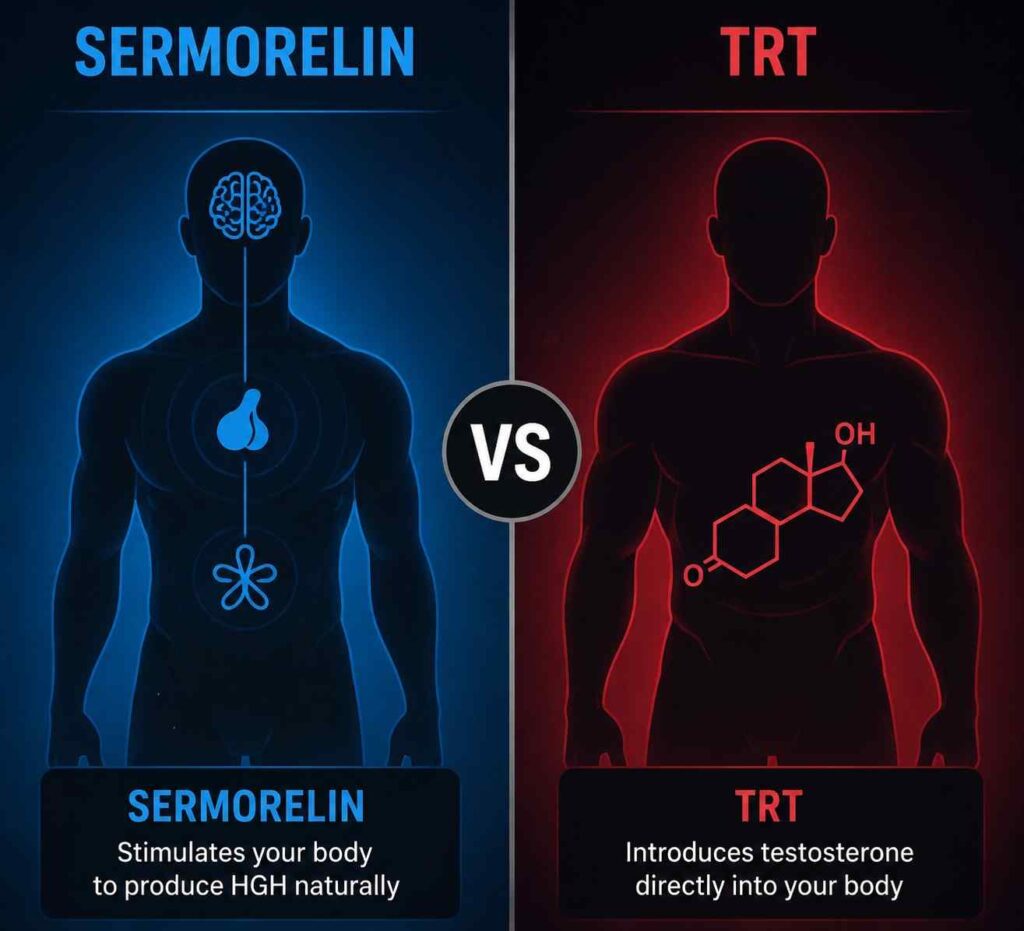
TRT Effectiveness
TRT is considered effective for individuals who have low testosterone levels and symptoms related to testosterone deficiency.
Potential improvements may include:
- Increased testosterone levels
- Better energy
- Improved sexual health
- Support for muscle strength
- Improved mood
TRT is generally focused on correcting testosterone deficiency rather than optimizing other hormone pathways.
The best treatment is the one that matches the hormone imbalance being treated.
Sermorelin vs TRT for Muscle Growth
Muscle growth is one of the most common reasons people research hormone therapy options.
However, Sermorelin and TRT influence muscle development differently.
Sermorelin and Muscle Growth
Sermorelin may support muscle-related goals by increasing natural growth hormone release.
Growth hormone contributes to:
- Tissue repair
- Protein synthesis support
- Recovery processes
- Muscle maintenance
However, results may vary depending on age, lifestyle, exercise routine, nutrition, and individual hormone response.
TRT and Muscle Growth
Testosterone has a direct relationship with muscle development.
Adequate testosterone levels support:
- Muscle protein production
- Strength development
- Lean body mass maintenance
Individuals with low testosterone may notice improvements in muscle-related outcomes after testosterone levels are restored.
Sermorelin vs TRT for Weight Loss and Fat Reduction
Hormones play an important role in metabolism and body composition.
Sermorelin and Weight Management
Growth hormone is involved in fat metabolism. By supporting growth hormone release, Sermorelin may help support healthier body composition when combined with proper nutrition and exercise.
TRT and Weight Management
Low testosterone levels may be associated with changes in body composition, including reduced muscle mass and increased fat accumulation.
Restoring testosterone levels may support:
- Lean muscle maintenance
- Healthy metabolism
- Improved physical performance
Neither Sermorelin nor TRT should be viewed as a replacement for healthy lifestyle habits.
Hormone therapy works best when combined with proper nutrition, exercise, and healthy daily habits.
Sermorelin vs TRT for Men
Men often explore hormone therapies due to age-related hormone changes.
The better option depends on the specific hormone concern.
Sermorelin may be considered when the goal is supporting growth hormone production.
TRT may be considered when testing confirms low testosterone.
A healthcare provider may evaluate:
- Symptoms
- Blood tests
- Age
- Lifestyle factors
- Medical history
Choosing based only on symptoms without testing may lead to an unsuitable treatment approach.
Sermorelin vs TRT for Women
Although hormone therapy discussions often focus on men, women may also experience changes in hormone levels as they age.
Sermorelin may be explored for growth hormone-related wellness goals.
TRT may occasionally be considered for women with specific hormone concerns under medical supervision.
Women generally require different dosing considerations compared with men.
Hormone therapy should always be personalized because every individual has different hormone needs.
Final Thoughts: Sermorelin vs TRT
Sermorelin and TRT are both hormone-related therapies, but they serve very different purposes. Sermorelin focuses on stimulating natural growth hormone production, while TRT focuses on restoring testosterone levels in individuals with low testosterone.
For those interested in supporting growth hormone pathways, Sermorelin may be an option worth discussing with a healthcare provider. For individuals experiencing confirmed testosterone deficiency, TRT may provide targeted hormone support.
Before choosing either treatment, proper testing and professional guidance are essential.
Hormone optimization is not about choosing the strongest therapy—it is about choosing the therapy that matches your body’s needs.
At Nuvectra Medical, understanding your hormone health options can help you make informed decisions about wellness, recovery, and long-term health goals.
References
Risks of testosterone replacement therapy in men
TRT: Separating Fact from Fiction
Sermorelin
Peptides: Types, Uses, and Benefits
.