Is GLP-1 Safe? Benefits, Risks & Side Effects Explained
Wondering is GLP-1 safe? Learn about GLP-1 benefits, possible side effects, risks, and what you should know before starting treatment.
Is GLP-1 Safe? What You Need to Know Before Starting Treatment

GLP-1 medications have become one of the most talked-about treatments for weight management and metabolic health. As more people explore options like semaglutide and other GLP-1 receptor agonists, a common question persists: Is GLP-1 safe?
These medications have gained attention because of their ability to support weight loss, improve blood sugar control, and help people manage conditions associated with metabolic health.
However, like any prescription medication, GLP-1 treatments are not suitable for everyone and may come with potential side effects.
Understanding how GLP-1 medications work, their benefits, safety profile, possible risks, and who should avoid them can help individuals make informed decisions with their healthcare providers.
GLP-1 medications are generally considered safe for many eligible patients when prescribed appropriately and monitored by a qualified healthcare professional.
This guide explains everything you need to know about GLP-1 safety, including common side effects, long-term considerations, and important questions to discuss with your doctor.
What Are GLP-1 Medications?
GLP-1 medications are a class of prescription treatments that mimic a naturally occurring hormone called glucagon-like peptide-1 (GLP-1).
GLP-1 is produced naturally in the body after eating and plays an important role in regulating:
- Blood sugar levels
- Appetite control
- Digestion
- Insulin production
- Feelings of fullness after meals
GLP-1 receptor agonists work by activating GLP-1 pathways in the body. This can help improve glucose regulation, reduce hunger signals, and support healthier eating patterns.
Some commonly known GLP-1 medications include:
- Semaglutide
- Tirzepatide (works on GLP-1 and GIP pathways)
- Liraglutide
- Dulaglutide
Originally developed to help manage type 2 diabetes, many GLP-1 medications have also become widely used for chronic weight management in eligible individuals.
How Do GLP-1 Medications Work?
GLP-1 medications support the body through several different mechanisms.
They Help Regulate Blood Sugar
GLP-1 medications stimulate insulin release when blood sugar levels increase. This helps the body process glucose more effectively. They may also reduce the amount of glucose released by the liver, helping maintain healthier blood sugar levels.
They Reduce Appetite Signals
One of the reasons GLP-1 medications are popular for weight management is their effect on appetite. They interact with areas of the brain involved in hunger and food cravings, which may help individuals:
- Feel full longer
- Reduce overeating
- Control portion sizes
- Make healthier food choices
They Slow Digestion
GLP-1 medications slow the movement of food through the stomach. This can create a longer-lasting feeling of fullness after eating. However, slower digestion is also responsible for some common side effects, such as nausea and bloating.
Benefits of GLP-1 Medications
When prescribed appropriately, GLP-1 medications may provide several benefits.
- Supports Weight Loss: GLP-1 medications can help reduce appetite and support healthier calorie intake.
- Improves Blood Sugar Management: They may help people with type 2 diabetes maintain better glucose control.
- Helps Reduce Food Cravings: Many users report improved control over hunger signals.
- Supports Metabolic Health: GLP-1 treatments may improve several markers of metabolic health.
- May Improve Quality of Life: Successful weight management may support better mobility, confidence, and daily comfort.
Is GLP-1 Safe for Weight Loss?

For many adults who meet medical guidelines, GLP-1 medications can be a safe and effective option for weight management.
Clinical research has shown that approved GLP-1 treatments can help support significant weight reduction when combined with healthy lifestyle habits.
Safety depends on choosing the right medication, using the correct dosage, and receiving proper medical supervision.
GLP-1 medications are not designed as quick-fix solutions. They are typically used as part of a broader approach that may include:
- Balanced nutrition
- Regular physical activity
- Lifestyle changes
- Ongoing healthcare monitoring
A healthcare provider can determine whether GLP-1 treatment is appropriate based on factors such as:
- Medical history
- Current medications
- Weight goals
- Existing health conditions
- Risk factors
Are GLP-1 Medications FDA Approved?
Several GLP-1 medications have received approval from the U.S. Food and Drug Administration (FDA) for specific medical uses.
Depending on the medication, approved uses may include:
- Type 2 diabetes management
- Chronic weight management
- Reducing certain health risks associated with obesity
FDA approval means medications have undergone clinical evaluation for safety, effectiveness, manufacturing standards, and proper usage guidelines.
However, approval does not mean a medication is completely free from risks.
Every prescription medication has potential benefits and possible side effects.
Common GLP-1 Side Effects
Most GLP-1 side effects are related to the digestive system because these medications affect stomach emptying and appetite regulation.
- Nausea
- Vomiting
- Diarrhea
- Constipation
- Stomach Discomfort
Who Should Avoid GLP-1 Medications?
GLP-1 medications may not be appropriate for everyone.
A healthcare provider may recommend avoiding GLP-1 treatment for individuals with certain conditions or risk factors.
People who may need additional evaluation include those with:
- A personal or family history of certain thyroid cancers
- Specific endocrine disorders
- Previous serious reactions to GLP-1 medications
- Certain gastrointestinal conditions
- Pregnancy or breastfeeding considerations
A medical evaluation is essential before starting any prescription weight-loss or metabolic medication.
Are GLP-1 Medications Safe Long Term?
Long-term safety is one of the most common concerns among patients.
Current research supports the safety of approved GLP-1 medications when used according to medical guidance.
However, because these medications are relatively newer compared with some long-established treatments, researchers continue studying:
- Long-term effects
- Cardiovascular outcomes
- Metabolic benefits
- Weight maintenance after stopping treatment
Patients using GLP-1 medications should have regular follow-ups with healthcare providers to monitor:
- Weight changes
- Blood sugar levels
- Side effects
- Overall health
Can GLP-1 Medications Affect Your Heart?
Research has shown that some GLP-1 medications may provide cardiovascular benefits, especially in people with diabetes or increased cardiovascular risk.
Potential heart-related benefits may include:
- Improved blood sugar control
- Reduced inflammation markers
- Lower cardiovascular risk in certain populations
However, individual results vary, and treatment decisions should always consider personal health history.
Serious Potential Risks of GLP-1 Medications
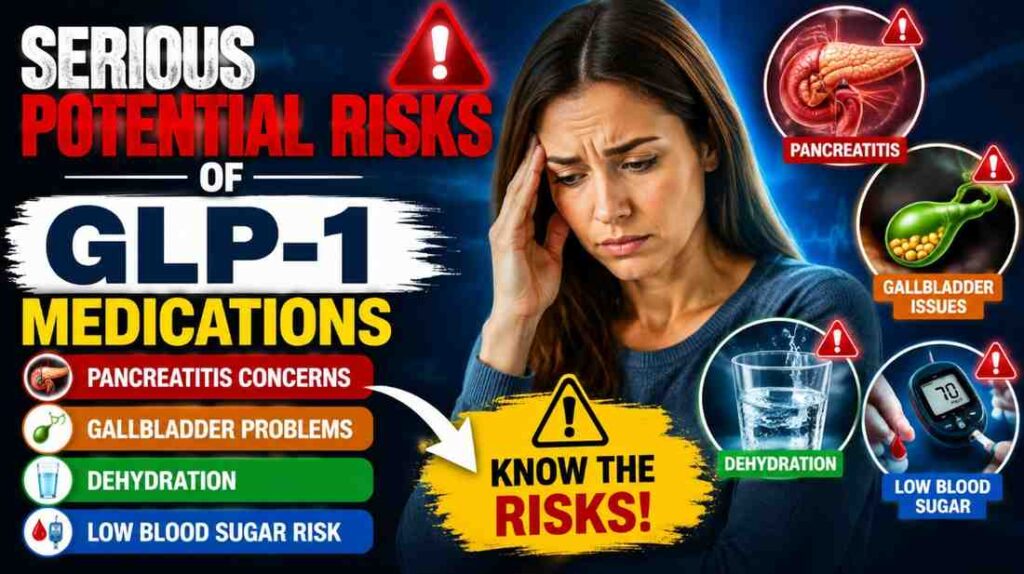
Although serious complications are uncommon, patients should understand possible risks.
Pancreatitis Concerns
Some GLP-1 medications carry warnings regarding possible pancreatitis.
Symptoms requiring medical attention may include:
- Severe abdominal pain
- Pain that spreads to the back
- Persistent vomiting
Anyone experiencing these symptoms should contact a healthcare professional immediately.
Gallbladder Problems
Rapid weight loss can increase the risk of gallbladder-related issues in some individuals.
Possible symptoms include:
- Upper abdominal pain
- Fever
- Nausea
- Yellowing of the skin or eyes
Dehydration
Side effects such as vomiting or diarrhea may lead to dehydration. Maintaining adequate fluid intake is important during treatment.
Low Blood Sugar Risk
GLP-1 medications alone generally have a lower risk of causing low blood sugar compared with some diabetes medications.
However, the risk may increase when combined with certain medications, especially insulin or sulfonylureas.
Are GLP-1 Medications Safe for Everyone Trying to Lose Weight?
No medication is suitable for everyone.
GLP-1 medications are generally intended for individuals who meet certain medical criteria rather than people looking for minor cosmetic weight changes.
A healthcare provider may evaluate:
- Body mass index (BMI)
- Weight-related health conditions
- Previous weight-loss attempts
- Overall medical status
The safest approach is personalized treatment rather than using medication without medical guidance.
How to Make GLP-1 Treatment Safer
Patients can improve their experience by following several safety practices.
Work With a Qualified Healthcare Provider
Medical supervision helps ensure:
- Appropriate medication selection
- Correct dosage
- Side effect monitoring
- Adjustments when needed
Follow Dosage Instructions
Taking more medication than prescribed does not improve results and may increase side effects.
Always follow your provider’s instructions.
Maintain Healthy Lifestyle Habits
GLP-1 medications work best when combined with:
- Protein-rich meals
- Balanced nutrition
- Strength training
- Regular movement
- Adequate sleep
Report Side Effects Early
Do not ignore unusual symptoms.
Early communication with your healthcare provider can help prevent complications and improve treatment success.
Final Thoughts
For many eligible patients, GLP-1 medications are considered safe and effective when prescribed correctly and monitored by healthcare professionals.
They have helped many individuals improve blood sugar control, manage weight, and support better metabolic health.
However, safety depends on several factors, including personal health history, proper dosage, medical supervision, and lifestyle choices.
The best way to determine whether GLP-1 treatment is right for you is through a personalized evaluation with a qualified healthcare provider.
At NuVectra Medical, patients can explore personalized healthcare options designed around their individual needs, goals, and wellness journey.
Reference Links:
.