Honey Trick for Lungs: Benefits, Uses & Safety Guide

Honey Trick for Lungs: Natural Respiratory Support Guide
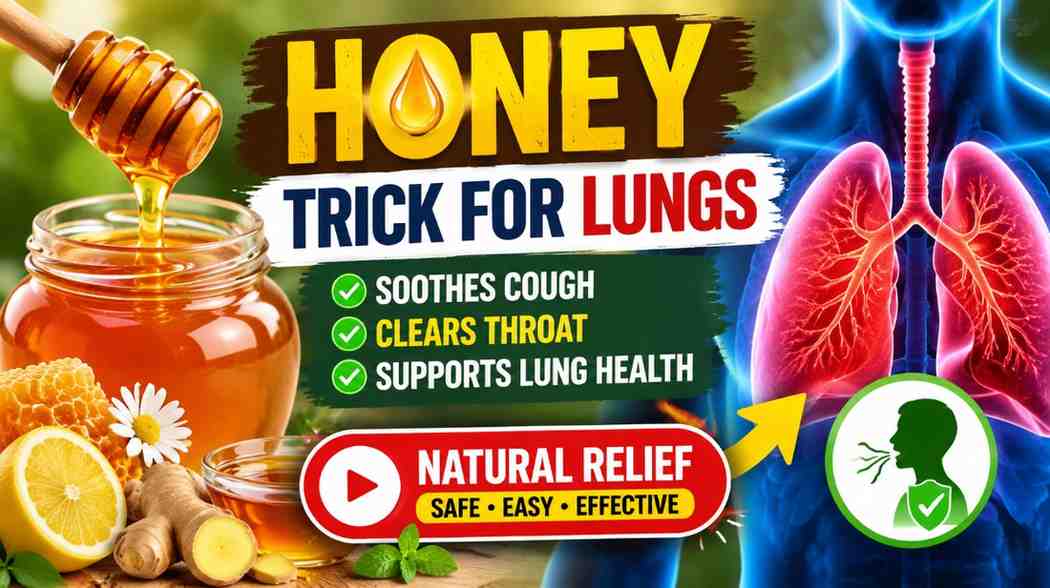
The idea of a “honey trick for lungs” has gained attention as more people look for natural ways to support respiratory health and ease everyday discomforts like coughing, throat irritation, and mild congestion.
Honey has been used for centuries in traditional wellness systems across cultures, valued for its soothing texture, natural sweetness, and calming effect on the throat.
In modern wellness discussions, honey is often explored as a supportive home remedy for respiratory comfort rather than a medical treatment.
This article explores honey in wellness routines, its effects on respiratory comfort, possible indirect lung support, and safe daily use.
What Is the Honey Trick for Lungs?
The “honey trick for lungs” is not a medical procedure or clinical treatment. Instead, it refers to a set of home practices where honey is consumed or combined with other natural ingredients to help soothe the respiratory tract.
Most commonly, this includes:
- Taking raw honey directly
- Mixing honey with warm water
- Combining honey with lemon, ginger, or herbal teas
- Using honey-based syrups for cough relief at home
The purpose is not to treat lung disease but to support comfort in the throat and upper airway, which can influence how the lungs feel during mild irritation or seasonal discomfort.
Honey is often included in traditional wellness practices because of its thick consistency, natural sugars, and soothing coating effect on mucous membranes.
How the Honey Trick for Lungs Works in the Body
Honey is a natural substance made by bees from flower nectar. It contains:
- Natural sugars (glucose and fructose)
- Antioxidants
- Trace enzymes and minerals
- Antibacterial compounds
Its effects on the respiratory system are mostly symptomatic and soothing, not curative.
Soothing Effect
Honey coats the throat and reduces irritation, which can calm the cough reflex.
Anti-inflammatory Properties
Honey may help reduce mild inflammation in the upper airway.
Antimicrobial Action
Some types of honey may slow bacterial growth in laboratory settings.
How Honey Trick for Lungs May Support Respiratory Comfort
Although honey is not a medication for lung conditions, it may offer supportive benefits for respiratory wellness. These effects are mainly linked to how honey interacts with the throat and upper airway rather than the lungs directly.
1. Soothing Irritated Throat Tissue
One of the most recognized benefits of honey is its ability to coat the throat. When the throat is irritated due to coughing, dry air, or seasonal changes, honey may provide temporary soothing relief.
2. Supporting Cough Comfort
Honey is often used in home remedies for nighttime cough. A calm throat may help reduce frequent coughing, especially during sleep. Better sleep quality can also support overall respiratory recovery.
3. Moisture Retention in the Airways
Honey’s thick, sticky consistency helps it adhere to the throat lining. This may help retain moisture in irritated areas, reducing dryness that can trigger coughing or discomfort.
4. Natural Antioxidant Properties
Honey contains natural antioxidants such as flavonoids and phenolic compounds. These compounds support general wellness by helping the body manage oxidative stress, which is linked to inflammation in various tissues.
Common Ways to Use the Honey Trick for Lungs
There are several simple and traditional methods people use to experience honey’s soothing effects.
1. Honey and Warm Water
This is the simplest method:
- Mix 1–2 teaspoons of honey in warm water
- Drink slowly
This may help soothe the throat and provide hydration.
2. Honey and Lemon Drink
Lemon is often combined with honey to create a refreshing drink.
Potential benefits:
- Soothes throat irritation
- Provides hydration
- May help loosen mucus temporarily
3. Honey and Ginger Tea
Ginger is widely used in traditional remedies.
When combined with honey:
- It creates a warming effect
- May help calm throat irritation
- Supports comfort during seasonal changes

4. Honey Before Bed
Taking a small spoon of honey before sleep is a popular home remedy.
It may:
- Reduce nighttime coughing
- Improve sleep quality
- Provide throat comfort overnight
Does the Honey Trick for Lungs Actually Help the Lungs?
It is important to understand the difference between direct lung treatment and supportive throat care.
Honey does not:
- Treat lung infections
- Cure asthma or COPD
- Replace prescribed respiratory medications
- Directly cleanse lung tissue
However, honey may:
- Soothe the throat and upper airway
- Reduce cough frequency in mild cases
- Improve comfort during respiratory irritation
- Support better sleep during illness
Because the throat and lungs are connected through the airway system, improving throat comfort may indirectly improve how breathing feels.
What Does Research Say?
Scientific studies have evaluated honey primarily for cough relief rather than lung disease treatment.
Research suggests honey may:
- Reduce cough severity
- Improve nighttime cough symptoms
- Help children sleep better during colds (for those older than one year)
- Offer mild antimicrobial activity in laboratory settings
However, researchers have not demonstrated that honey can:
- Cure pneumonia
- Reverse COPD
- Treat asthma
- Repair lung damage
- Eliminate mucus permanently
- Replace antibiotics
Therefore, honey should be viewed as a supportive home remedy—not a medical treatment.
Honey and Cough Relief
One of honey’s best-supported uses is reducing cough symptoms.
Experts believe honey works by:
- Coating irritated throat tissues
- Triggering saliva production
- Reducing throat dryness
- Calming cough receptors
This explains why many people experience temporary relief after taking a spoonful of honey before bedtime.
Does Honey Remove Mucus?
Many online articles claim honey “melts” or “dissolves” mucus.
Current evidence does not support this claim.
Honey does not chemically break down mucus inside the lungs.
Instead, warm fluids consumed with honey may:
- Improve hydration
- Thin mucus naturally
- Make mucus easier to cough up
Hydration—not honey alone—is largely responsible for this effect.
Can Honey Clean the Lungs?
The lungs already have their own cleaning system.
Healthy lungs continuously remove dust, microbes, and particles using:
- Tiny hair-like cilia
- Protective mucus
- Immune cells
- Natural coughing
No food or drink—including honey—can “detox” or “cleanse” the lungs.
The body performs this function naturally.
Honey for Smokers
Some people search for the honey trick after quitting smoking.
Although honey may soothe throat irritation during smoking cessation, it cannot:
- Remove tar from lungs
- Reverse emphysema
- Heal COPD
- Repair damaged air sacs
The most effective way to improve lung health after smoking is quitting tobacco completely.
Honey with Lemon
One of the most common home remedies combines:
- Warm water
- Honey
- Lemon juice
Potential benefits include:
- Soothing sore throat
- Promoting hydration
- Temporary cough relief
- Refreshing taste
The drink is comforting but should not be considered a treatment for lung disease.
Honey with Ginger
- Honey and ginger are frequently combined during cold and flu season.
- Ginger contains natural plant compounds that may support normal inflammatory responses and digestion.
- Together, honey and ginger create a soothing beverage that may ease throat discomfort and coughing.
Honey with Turmeric
- Turmeric contains curcumin, a compound studied for its antioxidant and anti-inflammatory properties.
- Although promising in laboratory research, there is insufficient evidence that honey and turmeric mixtures improve lung diseases in humans.

Honey Trick for Lungs: Safe Usage Guidelines
While honey is generally safe for most adults, it should still be used correctly.
Recommended Usage Tips
- Use 1–2 teaspoons as needed
- Prefer raw or minimally processed honey
- Mix with warm (not boiling) water
- Avoid excessive intake due to sugar content
Important Safety Notes
- Not suitable for infants under 1 year old
- People with diabetes should monitor sugar intake
- Those with allergies to pollen or bee products should use caution
Who May Find the Honey Trick for Lungs Helpful?
The honey trick for lungs may be helpful for:
- Individuals with occasional dry cough
- People experiencing seasonal throat irritation
- Those exposed to dry air or pollution
- Individuals seeking natural soothing remedies
It is not intended for chronic respiratory diseases without medical supervision.
Limitations of the Honey Trick for Lungs
While honey can be helpful for comfort, it has clear limitations:
- It does not treat underlying lung conditions
- It cannot replace inhalers or prescribed medication
- It is not effective for bacterial pneumonia or serious infections
- Results vary depending on the individual
Understanding these limitations is important to avoid misuse or unrealistic expectations.
Lifestyle Tips to Support Lung Health, Alongside Honey
If you are exploring the honey trick for lungs, it works best when combined with healthy habits:
Stay Hydrated
- Water helps thin mucus and keeps airways moist.
Avoid Irritants
- Reducing exposure to smoke, dust, and pollution supports respiratory comfort.
Practice Breathing Exercises
- Gentle breathing techniques may support lung capacity and relaxation.
Maintain Indoor Air Quality
- Using humidifiers can reduce dryness in the airways.
When to See a Doctor Instead of Using the Honey Trick for Lungs
You should not rely solely on home remedies like honey if you experience:
- Persistent cough lasting more than 2–3 weeks
- Shortness of breath
- Chest pain or tightness
- Fever with respiratory symptoms
- Wheezing or chronic breathing difficulty
These may indicate conditions requiring medical evaluation.
Final Thoughts on the Honey Trick for Lungs
The honey trick for lungs is best understood as a traditional wellness approach aimed at soothing the throat and supporting respiratory comfort.
While honey does not directly treat lung diseases, it may help reduce irritation, ease coughing, and improve overall comfort when used appropriately.
When combined with healthy lifestyle habits and proper medical care when needed, honey can be a helpful part of a broader respiratory wellness routine.
References
Mayo Clinic – Honey for cough relief
Healthline – Honey for cough & cold
WebMD – Honey health benefits