Honey Trick for Dementia: Scam or Legit? Read This
Dementia, a condition that affects millions worldwide, is characterized by a decline in memory, thinking, and reasoning skills.
It is often associated with aging, though it can occur at younger ages due to genetic or environmental factors. As modern medicine continues to search for effective treatments, natural remedies are gaining attention.
Among these, the “Honey Trick for Dementia” has emerged as a promising, simple, and accessible approach to supporting cognitive health.
✨ Boost Energy & Memory with Honey Every Day! 🧠


Honey has been revered for centuries as a natural sweetener with therapeutic properties. Beyond its nutritional benefits, research indicates that certain types of honey contain bioactive compounds that may support brain function and reduce the risk of neurodegenerative conditions.
The Honey Trick for Dementia may help support memory and brain health naturally through antioxidants, anti-inflammatory compounds, and gentle neuronal energy.
This article delves deep into the honey trick, exploring how it works, the science behind it, and practical ways to incorporate it into your daily routine to potentially enhance memory and cognitive function.
Understanding Dementia and Its Challenges
Dementia is not a single disease but a syndrome encompassing various conditions, including Alzheimer’s disease, vascular dementia, Lewy body dementia, and frontotemporal dementia. These conditions share common symptoms, such as:
- Memory loss that disrupts daily life
- Difficulty in problem-solving or planning
- Confusion about time or place
- Changes in mood, personality, or behavior
- Trouble with communication or understanding
The underlying causes of dementia often involve complex interactions between genetics, lifestyle, and environmental factors.
One of the most significant contributors is oxidative stress and inflammation in the brain, leading to neuronal damage.
Additionally, amyloid plaques and tau protein tangles, primarily in Alzheimer’s disease, interfere with normal brain signaling and memory formation.
While there is no definitive cure for most types of dementia, interventions that promote brain health, reduce inflammation, and enhance neuronal function can help slow progression and improve quality of life. This is where natural remedies, including honey, have gained recognition.
Why Honey? The Science Behind Its Neuroprotective Properties
Honey is more than a sweet treat; it is a complex substance containing sugars, enzymes, antioxidants, vitamins, and minerals.
Its neuroprotective effects are primarily attributed to its antioxidant and anti-inflammatory compounds. These compounds may help protect brain cells from oxidative stress, a key factor in cognitive decline.
Key Bioactive Components in Honey
Flavonoids and Polyphenols
Honey contains numerous flavonoids and polyphenols, which are plant-derived compounds with antioxidant properties. These compounds help neutralize free radicals that damage brain cells and contribute to cognitive decline.
Phenolic Acids
Phenolic acids in honey have been linked to improved cognitive function by reducing inflammation in the central nervous system. Chronic inflammation is a known risk factor for dementia, and reducing it can support long-term brain health.
Natural Sugars
The glucose and fructose in honey provide a gentle source of energy for neurons. Unlike refined sugars, honey’s natural composition supports steady energy release, which is crucial for proper brain function.
Enzymes
Enzymes such as glucose oxidase in honey have antibacterial and neuroprotective roles. They may help reduce oxidative stress in neural tissues.
Scientific studies indicate that honey consumption can improve memory performance and learning ability in animal models, and emerging research in humans suggests similar benefits. While honey alone cannot reverse dementia, it can serve as a supportive dietary strategy to enhance cognitive function.
Golden Honey Rituals: Elevate Your Brain & Body

The Honey Trick for Dementia: How It Works
The “Honey Trick” involves the regular consumption of honey in a controlled manner, often combined with other natural compounds like cinnamon, walnuts, or herbal teas, which can synergistically enhance brain health. Here’s how it works:
Antioxidant Protection
Oxidative stress contributes to neuronal damage, a hallmark of dementia. Honey’s antioxidants combat this stress, protecting neurons and supporting long-term cognitive function.
Anti-inflammatory Effects
Inflammation in the brain disrupts normal neuronal communication. Honey’s polyphenols and flavonoids reduce inflammation, potentially slowing cognitive decline.
Enhanced Energy Metabolism
Brain cells require constant energy to function. Honey provides natural sugars that sustain energy levels, improving focus and mental clarity.
Neurogenesis Support
Some studies suggest that honey can promote neurogenesis, the formation of new neurons, in critical areas like the hippocampus, which is essential for memory formation and recall.
Synergistic Effects with Other Foods
When combined with other brain-friendly foods, honey’s benefits are amplified. For example, mixing honey with walnuts, a rich source of omega-3 fatty acids, may further improve memory and cognitive resilience.
How to Use the Honey Trick Safely
Incorporating the honey trick into your routine is straightforward, but moderation and quality are key. Here are practical ways to use it:
1. Morning Ritual
- Take one teaspoon of raw, organic honey every morning on an empty stomach.
- Optionally, mix it with warm water or herbal tea to support gentle digestion and absorption.
2. Evening Boost
- Combine honey with a small amount of cinnamon powder or crushed walnuts.
- Consume before bedtime to potentially support overnight brain repair and memory consolidation.
3. Honey in Meals
- Use honey as a natural sweetener in oatmeal, yogurt, or smoothies.
- Avoid excessive heat, as high temperatures can degrade honey’s bioactive compounds.
4. Quality Matters
- Always choose raw, unprocessed honey to ensure maximum nutrient retention.
- Manuka honey or local raw honey varieties are particularly rich in bioactive compounds.
5. Moderation
- Limit intake to 1–2 teaspoons per day for adults, especially for those with diabetes or blood sugar concerns.
- Pair honey with foods high in fiber or protein to prevent rapid blood sugar spikes.
Supporting Evidence and Research
Emerging research supports honey’s role in brain health. A few notable studies include:
- Animal Studies: Rats supplemented with honey showed improved memory retention and learning abilities in maze tests. These effects are attributed to honey’s antioxidant properties.
- Human Observational Studies: Individuals consuming moderate amounts of honey in combination with a healthy diet demonstrated better cognitive function and reduced markers of oxidative stress.
- Synergistic Approaches: Combining honey with cinnamon or omega-3-rich foods appears to enhance memory performance and neuronal protection more than honey alone.
While research is still in the early stages, these findings suggest that honey can be a valuable tool in maintaining cognitive health and supporting brain resilience.
Lifestyle Integration: Beyond Honey
While the honey trick offers potential cognitive benefits, it should be part of a holistic approach to brain health. Key lifestyle strategies include:
Balanced Diet: Emphasize fruits, vegetables, whole grains, lean proteins, and omega-3 fatty acids. These nutrients complement honey’s neuroprotective effects.
Regular Physical Activity: Exercise improves blood flow to the brain, promotes neurogenesis, and supports overall cognitive function.
Mental Stimulation: Engage in activities such as reading, puzzles, or learning new skills to strengthen neural pathways.
Adequate Sleep: Sleep is crucial for memory consolidation and brain detoxification. Aim for 7–9 hours of quality sleep per night.
Stress Management: Chronic stress can exacerbate cognitive decline. Meditation, yoga, or deep-breathing exercises can help maintain brain health.
Social Engagement:Maintaining strong social connections has been linked to reduced risk of dementia and improved cognitive resilience.
Sweet Life Hack: Daily Honey for Brain & Wellness
Potential Benefits Observed
Regularly incorporating the honey trick, as part of a balanced lifestyle, may support:
- Improved memory retention
- Enhanced learning ability
- Reduced oxidative stress in the brain
- Support for neurogenesis
- Anti-inflammatory effects in neural tissue
- Steady energy levels for cognitive tasks
- Improved mood and mental clarity
- Complementary effects with brain-friendly diets
Caution and Considerations
While honey is natural, overconsumption can lead to elevated blood sugar levels. Individuals with diabetes or metabolic conditions should monitor intake carefully.
Additionally, honey should not replace prescribed medications or medical treatments for dementia.
It is recommended to consult a healthcare provider before starting any dietary intervention, particularly for individuals with underlying health conditions or those taking medications.
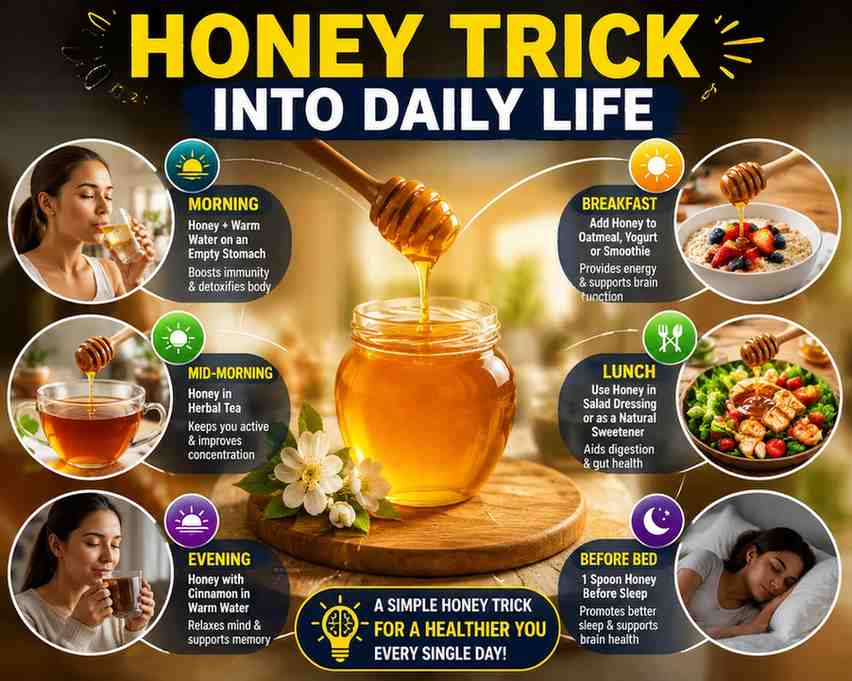
Incorporating the Honey Trick Into Daily Life
To maximize the benefits, consistency is essential. Here’s a simple daily routine:
- Morning: One teaspoon of raw honey in warm water or herbal tea.
- Afternoon Snack: Mix honey with walnuts or seeds for a brain-boosting snack.
- Evening: Honey with cinnamon or in yogurt to support overnight cognitive function.
By integrating honey thoughtfully into meals and snacks, you create a sustainable habit that supports long-term brain health.
Final Thoughts
The honey trick for dementia offers a natural, accessible approach to supporting cognitive health. While it is not a cure, its antioxidant and anti-inflammatory properties, along with its ability to provide gentle neuronal energy, make it a valuable addition to a brain-healthy lifestyle.
Combined with regular exercise, mental stimulation, a balanced diet, and adequate sleep, honey may help enhance memory, learning, and overall brain function.
Embracing natural strategies like this empowers individuals to take proactive steps in supporting cognitive resilience, potentially slowing the progression of memory decline and improving quality of life.
By integrating the honey trick thoughtfully into daily routines and pairing it with other brain-supporting habits, individuals can take a meaningful step toward nurturing their cognitive health in a natural, enjoyable way.
Reference
- Brain Benefits of Honey: https://www.healthline.com/nutrition/honey-benefits
- Honey and Cognitive Health: https://www.webmd.com/diet/ss/slideshow-honey-health-benefits
- Honey and Neuroprotection: https://www.ncbi.nlm.nih.gov/pmc/articles/PMC3611628/
- Dementia Overview: https://www.mayoclinic.org/diseases-conditions/dementia/symptoms-causes/syc-20352013
- Honey’s Antioxidant Effects on the Brain: https://www.sciencedirect.com/science/article/pii/S2213231719301285