Honey and Baking Soda Trick: Benefits, Uses & Safety
The honey and baking soda trick refers to a homemade mixture that combines honey with baking soda, usually with the intention of supporting a particular health goal.
The idea has become increasingly popular through social media, blogs, and home-remedy discussions. Honey is a natural food that contains sugars and various plant compounds.
Baking soda, also called sodium bicarbonate, is a common household ingredient used in cooking and baking.
It is also used medically in specific circumstances, including as an antacid, when taken according to appropriate directions.
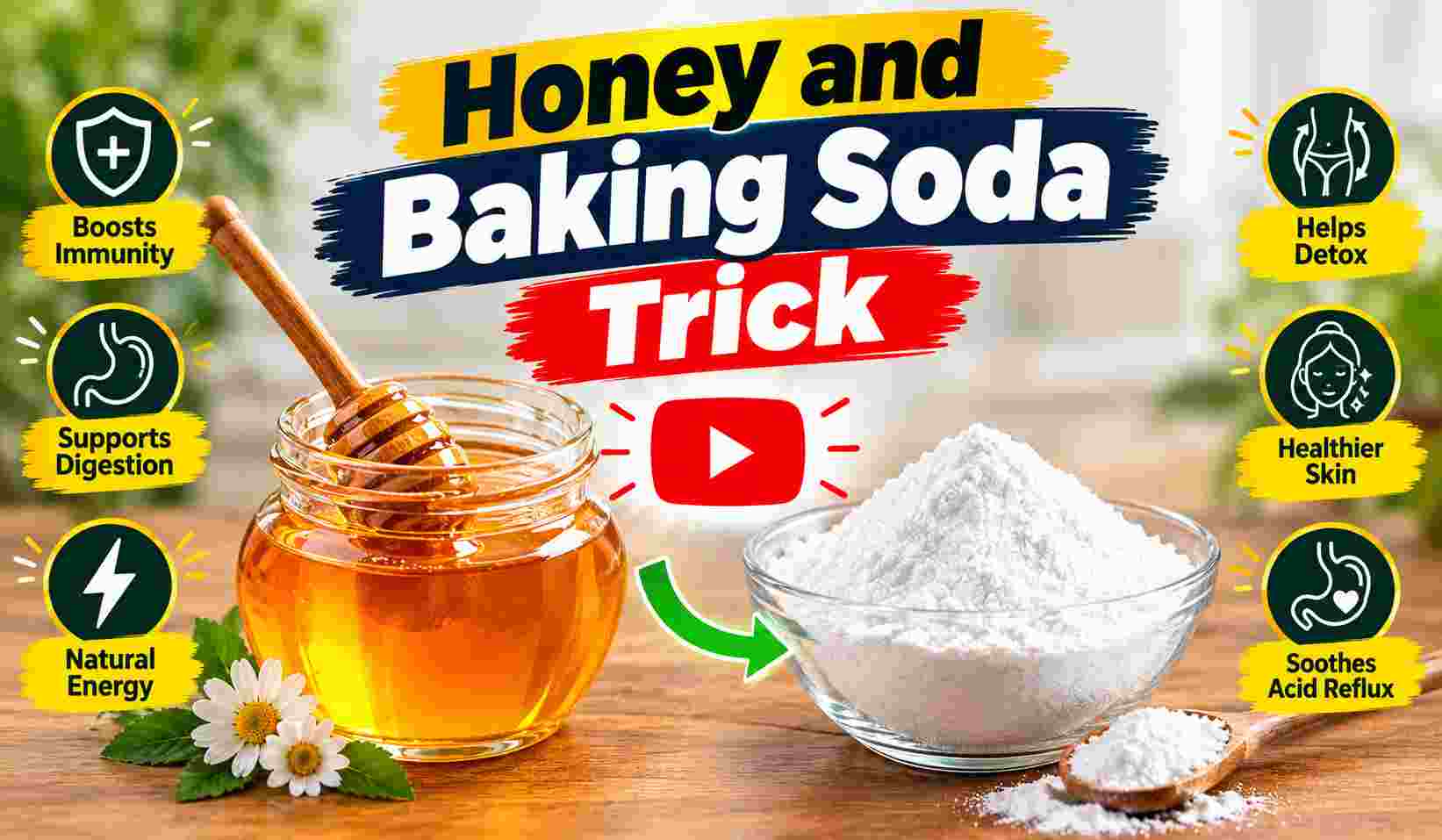

The honey and baking soda trick is a popular home remedy, but evidence does not prove the mixture treats specific health conditions.
However, the fact that two familiar household ingredients can be used safely in certain situations does not mean that combining them creates a proven treatment.
There is no well-established medical formula known as the “honey and baking soda trick.” The mixture may be promoted online for different purposes, including digestion, energy, detoxification, weight management, sexual health, skin concerns, or general wellness.
These claims should be evaluated separately because evidence for one use cannot automatically be applied to another.
Before trying a viral remedy, it is important to understand what each ingredient actually does and what researchers know about combining them.
Why Has the Honey and Baking Soda Trick Become Popular?
Home remedies have existed for generations. People often turn to simple ingredients because they are inexpensive, easy to find, and familiar.
Honey has traditionally been used as a food and as a home remedy, particularly for soothing coughs. Some research supports limited uses of honey, although its benefits depend on the health concern being addressed.
Baking soda has a different role. Sodium bicarbonate can neutralize stomach acid and is used in certain antacid products. It is also widely used in cooking and household applications.
The popularity of the honey and baking soda trick may come from the assumption that combining two useful ingredients produces a stronger effect.
Honey and Baking Soda Trick: What Does Science Say?
At present, there is not enough high-quality clinical evidence to conclude that a honey-and-baking-soda mixture treats a specific disease or medical condition.
Research has examined honey independently for several purposes. A review of human studies found potential benefits associated with honey consumption in several areas, although researchers also noted limitations in the available evidence and differences between studies.
Honey has also received attention for cough relief. The National Center for Complementary and Integrative Health notes that some research suggests honey may help reduce nighttime coughing in children with upper respiratory infections.
That does not mean honey can treat every condition for which it is promoted online.
👉 DON’T TRY THIS “HONEY AND BAKING SODA TRICK” UNTIL YOU SEE THIS
What Happens When Honey and Baking Soda Are Combined?
Honey and baking soda have very different chemical and nutritional properties.
Honey is primarily a sweet food containing carbohydrates, especially sugars. It also contains smaller amounts of other compounds, including minerals and plant-derived substances.
Baking soda is sodium bicarbonate, an alkaline compound. When it encounters an acid, it can participate in a chemical reaction that produces carbon dioxide.
This is why baking soda is useful in baking. It reacts with acidic ingredients and helps baked goods rise. When consumed, sodium bicarbonate can also affect stomach acidity.

How to Make the Honey and Baking Soda Trick
There are many versions of the honey and baking soda mixture circulating online, and they do not use consistent amounts or preparation methods.
For that reason, it would be misleading to present one homemade recipe as a medically proven treatment.
If you encounter a recipe online, check whether it specifies:
- The exact purpose of the mixture
- The amount of baking soda
- How frequently it should be consumed
- Who should avoid it
- Potential medication interactions
- Supporting clinical evidence
- Appropriate safety warnings
A recipe that simply says to mix honey with baking soda and consume it does not establish that the preparation is safe or effective.
Do not increase the amount of baking soda because you believe more will work better.Sodium bicarbonate contains sodium and can cause problems when consumed excessively.
Potential Benefits of Honey
Honey itself can be a useful food, and researchers have investigated several possible health-related effects.
1. May Help Soothe Cough
One of the better-known uses of honey is as a traditional cough remedy. Research summarized by NCCIH suggests that honey may help reduce nighttime coughing associated with upper respiratory infections in children. However, this evidence does not mean honey cures the infection itself.
2. Contains Plant Compounds
Honey contains various naturally occurring compounds, including phenolic substances. Research reviews have investigated possible antioxidant and anti-inflammatory properties of honey. However, the effects seen in laboratory studies should not automatically be interpreted as proof that eating honey will prevent or treat disease.
3. Can Replace Some Added Sweeteners
Honey can sometimes be used instead of other sweeteners. That does not make it calorie-free or sugar-free. Honey is still a source of sugar and should be consumed appropriately.
4. Has Traditional Uses
Honey has been used traditionally for food and wellness purposes for a very long time. Traditional use can provide a reason for researchers to investigate an ingredient, but it is not by itself proof of effectiveness.
What Are the Uses of Baking Soda?
Baking soda has several legitimate applications.
- Cooking and Baking: Sodium bicarbonate is commonly used as a leavening ingredient. It reacts with acidic components and helps dough or batter rise.
- Antacid Use: Sodium bicarbonate is also used as an antacid to relieve heartburn and acid indigestion.
- Household Uses: Baking soda is also commonly used for cleaning, deodorizing, and other household purposes.
👉 DON’T TRY THIS “HONEY AND BAKING SODA TRICK” UNTIL YOU SEE THIS
Is the Honey and Baking Soda Trick Safe?
Safety depends heavily on how much baking soda is consumed and who is taking it.
Small amounts of baking soda used appropriately in food are generally different from intentionally drinking concentrated baking soda mixtures.
MedlinePlus warns that large amounts of sodium bicarbonate can be poisonous. Excessive ingestion may lead to symptoms such as vomiting, diarrhea, weakness, muscle problems, and other potentially serious complications.
Natural or household ingredients are not automatically safe at every dose.
Who Should Be Especially Careful?
Some people should speak with a healthcare professional before using sodium bicarbonate medicinally.
This includes people with:
- High blood pressure
- Kidney disease
- Heart failure
- A sodium-restricted diet
- Certain gastrointestinal conditions
- Regular prescription medication use
MedlinePlus specifically recommends discussing sodium bicarbonate use with a doctor or pharmacist in several of these situations.
It can also interact with medications, which is why people taking prescription or over-the-counter drugs should not assume that a homemade mixture is harmless.

Can the Honey and Baking Soda Trick Help With Weight Loss?
This is one of the claims that deserves particular caution. There is no established evidence that a homemade mixture of honey and baking soda is a reliable weight-loss treatment.
Honey contains calories and carbohydrates. Baking soda does not provide a special fat-burning effect simply because it is alkaline.
Drinking baking soda is not a proven weight-loss strategy. Sustainable weight management generally depends on dietary patterns, physical activity, sleep, behavioral habits, and, when appropriate, evidence-based medical treatment.
Anyone experiencing unexplained weight gain or difficulty losing weight should consider discussing the issue with a healthcare professional instead of relying on viral recipes.
Can It Improve Digestion?
Baking soda can neutralize stomach acid, which is why sodium bicarbonate is used in some antacid products.
However, this does not mean that drinking a homemade honey-and-baking-soda mixture is an appropriate solution for ongoing digestive problems.
Frequent heartburn, abdominal pain, persistent bloating, nausea, or changes in bowel habits can have many possible causes.
Treating recurring symptoms with a home remedy can delay proper diagnosis. If symptoms occur frequently, it is better to determine the underlying cause rather than repeatedly trying homemade mixtures.
Can It Detox the Body?
Another common internet claim is that honey and baking soda can “detox” the body. There is no good evidence that drinking this combination performs a special detoxification process.
The body already has organs responsible for processing and eliminating many substances, particularly the liver and kidneys.
A food or household ingredient should not be described as a detox treatment without appropriate scientific evidence.
A viral detox claim is not the same as a medically established detoxification therapy.
Can It Treat Sexual Health Problems?
Some online versions of the baking soda trick are promoted for sexual performance or erectile difficulties.
There is no established clinical evidence that drinking honey and baking soda treats erectile dysfunction or reliably improves sexual performance.
Erectile difficulties can be associated with cardiovascular health, diabetes, medications, psychological factors, hormonal issues, and other medical conditions.
Instead of relying on an unproven home remedy, persistent erectile problems should be discussed with a qualified healthcare professional.
Sexual health symptoms can sometimes provide an important clue about overall health.
Can It Improve Skin?
Baking soda is sometimes recommended online as a DIY skin treatment. However, applying household baking soda to the skin can potentially cause irritation, particularly when used repeatedly or on sensitive skin.
Honey has been studied in certain wound-care contexts, but that does not mean ordinary kitchen honey should automatically be applied to an open wound.
Medical wound care should use appropriate products and professional guidance when necessary.
Honey and Baking Soda Trick for Teeth: Is It a Good Idea?
Baking soda is sometimes included in oral-care products, and toothpaste formulations may contain baking soda.
That does not mean mixing household baking soda with honey creates a better tooth-cleaning treatment. Honey is sugary and can contribute to dental concerns when consumed frequently.
People should generally rely on established oral hygiene practices such as brushing with fluoride toothpaste, cleaning between teeth, and receiving regular dental care.
Do not substitute a viral DIY mixture for professional dental care.
👉 DON’T TRY THIS “HONEY AND BAKING SODA TRICK” UNTIL YOU SEE THIS
Common Myths About the Honey and Baking Soda Trick
Myth 1: It Works for Every Health Problem
There is no universal home remedy that treats unrelated medical conditions. A mixture cannot be considered effective simply because it is promoted for multiple purposes online.
Myth 2: More Baking Soda Means Better Results
This is particularly dangerous. Excess sodium bicarbonate can cause toxicity and serious disturbances in the body’s electrolyte and acid-base balance.
Myth 3: Natural Ingredients Cannot Cause Side Effects
Honey and baking soda are familiar ingredients, but familiarity does not eliminate risk. Dose matters. Individual health conditions matter.
Myth 4: It Replaces Medical Treatment
A homemade mixture should not replace prescribed medication or evaluation of persistent symptoms.
Myth 5: Alkalizing the Body Prevents Disease
The body’s acid-base balance is tightly regulated. Drinking baking soda is not a safe general method for changing the body’s pH.
Possible Side Effects of Excess Baking Soda
Taking too much baking soda can cause unwanted effects.
Possible symptoms may include:
- Stomach discomfort
- Gas
- Nausea
- Vomiting
- Diarrhea
- Increased thirst
- Weakness
- Muscle symptoms
- Frequent urination
- Changes in the body’s electrolyte balance
Severe exposure can be much more serious. MedlinePlus notes that large amounts of baking soda can cause poisoning and potentially serious complications.
If someone has swallowed a large amount of baking soda, particularly if symptoms develop, contacting Poison Control or seeking emergency medical care is more appropriate than trying another home remedy.

What About Honey Safety?
Honey is generally safe for most adults when consumed as food.
However, honey should never be given to infants younger than 1 year because of the risk of infant botulism.
People with allergies to honey or related substances should also use caution.
Because honey is a source of sugar, people managing their sugar intake should consider portion size and their overall diet.
Again, the safety profile of honey by itself does not prove that combining it with baking soda provides a medical benefit.
Should You Try the Honey and Baking Soda Trick?
For general wellness, there is little reason to rely on an unproven honey-and-baking-soda mixture.
If you enjoy honey as a food, it can be included in a balanced diet. If you need an antacid, use an appropriate product according to its directions or speak with a healthcare professional.
The important distinction is between using an ingredient for its established purpose and assuming that a combination creates a new treatment.
If a social-media post claims that honey and baking soda can rapidly cure a disease, burn fat, eliminate toxins, improve sexual performance, or replace medication, look for credible clinical evidence before trying it.
Safer Alternatives to Viral Home Remedies
Instead of looking for a single “trick,” consider approaches supported by evidence and appropriate for the actual health concern.
For Occasional Heartburn
Follow evidence-based dietary and lifestyle measures and consider an appropriate antacid when suitable. Persistent or severe heartburn should be evaluated by a healthcare professional.
For a Cough
Honey may provide some symptomatic relief for certain coughs in appropriate age groups, but persistent, severe, or concerning symptoms require medical evaluation.
For Weight Management
Focus on a sustainable eating pattern, regular physical activity, adequate sleep, and professional support when needed.
For Sexual Health
Persistent erectile or sexual-function concerns deserve a medical evaluation because several treatable health conditions can contribute to them.
For Skin Problems
Use products formulated for the skin rather than experimenting with concentrated household ingredients.
👉 DON’T TRY THIS “HONEY AND BAKING SODA TRICK” UNTIL YOU SEE THIS
How to Evaluate a Home Remedy Before Trying It
The next time you see a viral health trick, ask five simple questions.
1. What exactly is it supposed to treat?
A vague promise such as “cleanses the body” is difficult to evaluate scientifically.
2. Is there human research?
Animal experiments and laboratory studies can be useful, but they do not prove that a treatment works in people.
3. Is the dose established?
A medical treatment requires appropriate dosing. Random amounts shared online are not a substitute for dosing guidance.
4. Can it interact with medication?
Household ingredients can still affect the body and potentially interact with medicines.
5. What are the risks?
A remedy with uncertain benefits and potentially meaningful risks may not be worth trying. Evidence and safety should come before convenience.
Honey and Baking Soda Trick: Final Verdict
The honey and baking soda trick is an interesting example of how traditional ingredients can become popular online as a supposed health solution.
Honey has some evidence supporting specific uses, particularly as a soothing option for certain coughs. Baking soda also has established uses, including as an antacid and in cooking.
Baking soda deserves particular caution because excessive consumption can cause serious health problems.
If your goal is to address a specific symptom, it is better to identify the underlying problem and choose an evidence-based approach rather than depending on a viral recipe.
For occasional dietary use, honey can be enjoyed as a food. For medicinal use of sodium bicarbonate, follow appropriate product directions and seek professional advice when necessary.
References
https://www.mayoclinic.org/drugs-supplements-honey/art-20363819
https://en.wikipedia.org/wiki/Baking_powder
https://www.healthline.com/nutrition/baking-soda-benefits-uses
.