
Honey Trick That Restores Vision: Facts and Eye Truths

Many natural remedies are popular online, and the “honey trick that restores vision” is often discussed as a traditional approach for supporting eye comfort, reducing strain, and promoting overall eye wellness.
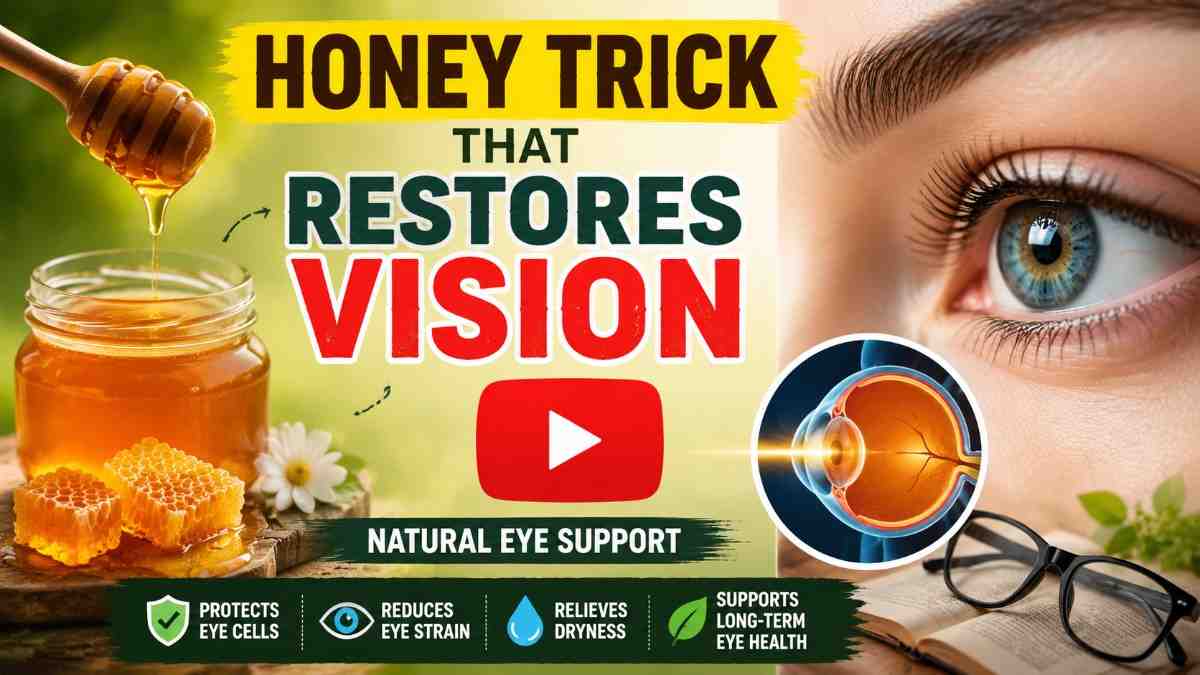

Honey Trick That Restores Vision: A Natural Eye Wellness Approach
The phrase “honey trick that restores vision” has become a viral topic across social media platforms, wellness blogs, and home remedy discussions.
While honey is a natural substance with well-known antibacterial and soothing properties, the idea that it can restore vision is not supported by ophthalmology or clinical research.
Vision is one of the most complex functions of the human body, involving precise coordination between the cornea, lens, retina, optic nerve, and brain.
This article provides a detailed, science-based explanation of why this claim exists, what honey can and cannot do, and what actually works for maintaining healthy vision.
What Is the “Honey Trick That Restores Vision”?
The so-called honey trick appears in several forms online:
- Applying raw or diluted honey directly to the eyes
- Drinking honey mixed with herbs or warm water for “eye healing”
- Using honey-based mixtures as eye drops or washes
- Claiming honey detoxifies or “repairs” vision over time
These claims are often supported by anecdotal stories, but they lack clinical validation or peer-reviewed scientific backing.
Medical institutions such as Mayo Clinic and Cleveland Clinic clearly state that vision loss, refractive errors, and eye diseases require medical diagnosis and treatment—not home remedies.
How Does the Honey Trick that Restores Vision Claim to Work?
The “honey trick” is not a single medical procedure. It is a collection of traditional wellness practices involving honey to support overall health, including eye comfort.
Most versions of the method fall into three categories:
- Internal consumption of honey for nutritional support
- Combination of honey with antioxidant-rich foods
- Traditional wellness routines aimed at reducing eye fatigue
The idea is based on honey’s natural compounds that may help the body fight oxidative stress and inflammation, two factors linked to eye strain and age-related vision changes.
Why Honey Became Linked to Eye Health
Honey is more than a natural sweetener. It contains a variety of biologically active compounds that make it interesting in the context of eye wellness.
The idea behind using honey for eye health comes from how its natural nutrients may help protect delicate eye tissues from stress, irritation, and age-related wear over time.
Nutritional Components of Honey
| Component | Eye Benefit |
|---|---|
| Antioxidants | Protect eye cells from damage |
| Vitamin C | Helps repair and reduce inflammation |
| Flavonoids | Slows age-related eye decline |
| Natural Enzymes | Supports gentle nourishment |
| Antibacterial Compounds | Helps protect against microbes |
Is the Honey Trick that Restores Vision Backed by Science?
Modern research does not support honey as a treatment for vision restoration. However, studies do suggest several supportive properties relevant to eye health.
What Research Indicates
- Honey may help reduce bacterial growth in infections (especially medical-grade honey)
- Antioxidants may help reduce oxidative stress in tissues
- It may support wound healing in eye-related surface injuries under clinical supervision
- It can provide soothing relief when used externally in approved medical forms
This means honey is better understood as a supportive natural substance, not a corrective vision treatment.
Safe Honey Trick that Restores Vision Routine for Eye Wellness
Instead of unsafe or misleading “eye-drop honey tricks,” the safe approach focuses on diet, hydration, and eye nourishment from within.
Step 1: Morning Honey Trick that Restores Vision Routine
- Take 1 teaspoon of raw, organic honey
- Mix it in a glass of lukewarm water
- Drink it on an empty stomach
- Wait 15–20 minutes before eating
Purpose: This supports hydration, digestion, and antioxidant intake early in the day.
Step 3: Evening Honey Trick that Restores Vision Habit
Pair honey with foods that naturally support eye health:
- Honey + carrots (beta-carotene support)
- Honey + almonds (vitamin E source)
- Honey + blueberries (antioxidants)
- Honey + amla (vitamin C boost)
Purpose: This enhances overall nutrient intake that supports retinal and cellular health.
Step 3: Evening Eye Relaxation Routine
While honey is not directly applied to the eyes, it can complement relaxation habits:
- Reduce screen exposure before bed
- Drink warm water (optional honey if needed)
- Practice eye relaxation techniques
- Maintain proper sleep cycles
Purpose: Helps reduce eye strain accumulated during the day.
Step 4: Daily Honey Eye Wellness Routine
This routine focuses on supporting general eye comfort and long-term wellness through safe and natural habits involving honey.
- Take 1 teaspoon of raw honey in lukewarm water every morning on an empty stomach.
- Maintain consistency to support antioxidant intake and hydration balance.
- Avoid consuming with very hot water to preserve natural enzymes.
Purpose: Helps support daily antioxidant intake, hydration, and overall body balance, which may indirectly benefit eye comfort.
Step 5: Nutrition-Based Vision Support Method
This method combines honey with nutrient-rich foods that are known to support eye health naturally.
- Honey + carrots for beta-carotene support
- Honey + almonds for vitamin E intake
- Honey + blueberries for antioxidant protection
- Honey + amla for vitamin C support
Purpose: Focuses on improving nutrient intake that supports retinal health, reduces oxidative stress, and promotes long-term eye wellness.
Step 6: Evening Eye Recovery Practice
This practice is designed to reduce eye strain and support relaxation after daily screen exposure.
- Reduce screen usage at least 1 hour before sleep
- Drink warm water; optional honey for relaxation support
- Practice eye relaxation techniques like blinking and palming
- Maintain a consistent sleep schedule
Purpose: Helps reduce digital eye strain, dryness, and fatigue while supporting overnight eye recovery.
Important Safety Warning (Very Important)
Many viral claims suggest putting honey directly into the eyes. This is not safe without medical supervision.
Never Do This:
- Do not apply raw honey directly into the eyes
- Do not mix homemade eye drops
- Do not replace prescribed eye medication
Improper use can lead to irritation, infection, or worsening of eye conditions.
Benefits Often Linked to the Honey Trick that Restores Vision
Even though honey does not “restore vision,” it may support the body in ways that indirectly benefit eye comfort.
1. Reduces Oxidative Stress
Free radicals can damage eye cells over time. Antioxidants in honey may help reduce this stress.
2. Supports Hydration Balance
Proper hydration helps reduce dry eyes and irritation.
3. Provides Natural Energy for Cells
Eye tissues require a constant energy supply for optimal function.
4. Supports Inflammation Balance
Chronic inflammation is linked to discomfort and eye fatigue.
Digital Eye Strain and Honey’s Role
Today’s biggest vision complaint is not disease; it is digital eye strain caused by screens.
Common Symptoms:
- Blurry vision
- Eye fatigue
- Dryness
- Headaches
Honey alone cannot fix this, but it can be part of a broader wellness routine that includes:
- 20-20-20 rule (look away every 20 minutes)
- Proper lighting
- Hydration
- Nutrient-rich diet
Age-Related Vision Changes
As people age, natural changes occur in the eyes such as reduced elasticity and slower regeneration.
Honey may help indirectly by supporting:
- Antioxidant intake
- Reduced inflammation
- Better nutritional balance
But age-related conditions like cataracts or macular degeneration require medical care.
Common Myths About the Honey Trick that Restores Vision
| Myth | Fact |
|---|---|
| Honey restores vision completely | Honey only supports general eye wellness, not vision correction |
| Honey eye drops can cure eye diseases | Direct use in eyes is unsafe without medical supervision |
| Honey replaces glasses or treatment | Corrective lenses and medical care are still required |
| Honey can reverse blindness | No scientific evidence supports vision restoration claims |
Lifestyle Habits That Improve Eye Health More Than Honey
Honey works best only when combined with healthy habits.
Strong Eye Health Practices:
- Balanced diet rich in vitamins A, C, and E
- Regular eye check-ups
- Reduced screen exposure
- Proper sleep (7–8 hours)
- Wearing UV protection outdoors
Eye Exercises That Complement the Routine
Simple exercises help reduce strain:
- Palming for relaxation
- Eye rolling movements
- Focus switching (near and far objects)
- Frequent blinking practice
These improve eye muscle flexibility and reduce fatigue.
Long-Term Vision Wellness Strategy
Instead of relying on a single remedy, eye health should be viewed as a long-term system.
Core Elements:
- Nutrition
- Lifestyle management
- Screen discipline
- Regular medical check-ups
- Stress reduction
Honey can be a small supportive element in this larger system.
Can the Honey Trick that Restores Vision Replace Medical Treatment?
Many online videos claim the Honey Trick that Restores Vision can replace glasses, surgery, or prescription eye treatments. However, eye specialists and clinical research do not support these claims.
Honey may provide antioxidants and can be part of a healthy diet, but it cannot reverse cataracts, glaucoma, macular degeneration, diabetic retinopathy, or refractive errors.
Anyone experiencing blurred vision, eye pain, sudden vision loss, or other concerning symptoms should consult an eye care professional for proper diagnosis and treatment.
The Honey Trick that Restores Vision should be viewed as a wellness practice rather than a medical solution.
Final Thoughts
The “honey trick that restores vision” is best understood as a traditional wellness concept, not a medical treatment.
Honey contains beneficial antioxidants and nutrients that may support overall eye comfort, reduce oxidative stress, and promote general wellness.
When used responsibly as part of a healthy lifestyle alongside proper nutrition, screen hygiene, and medical guidance, honey can play a supportive role in maintaining long-term eye health.
Ultimately, the honey trick is not a cure for vision loss, but a supportive wellness habit that may contribute to overall eye comfort when used responsibly.
References
https://pmc.ncbi.nlm.nih.gov/articles/PMC3953621/
https://www.healthline.com/health/honey-in-eyes
https://en.wikipedia.org/wiki/Vision
https://www.mayoclinic.org/healthy-lifestyle/adult-health/in-depth/eye-care/art-20048237